

Tinnitus, why do I have it when there’s nothing wrong with my ears?
Real tinnitus causes start with head and skull tension
hello
I am Dr. Hwang Sang-Cheol
Dr. Sangchul Hwang
Tinnitus sufferers have a common story.
Your ear tests are normal, your MRI shows nothing unusual.
but the constant beeping, popping, and roaring is making it difficult to go about their daily lives.
Many people naturally think
“Tinnitus comes from the ears, so it must be an ear problem.”
but in practice, there is often nothing wrong with the ears.
Much more often, tinnitus is caused by tension in the muscles of the head, temporal bone, and occipital bone.
Tinnitus can be both an ear problem and a tension problem in the whole head.
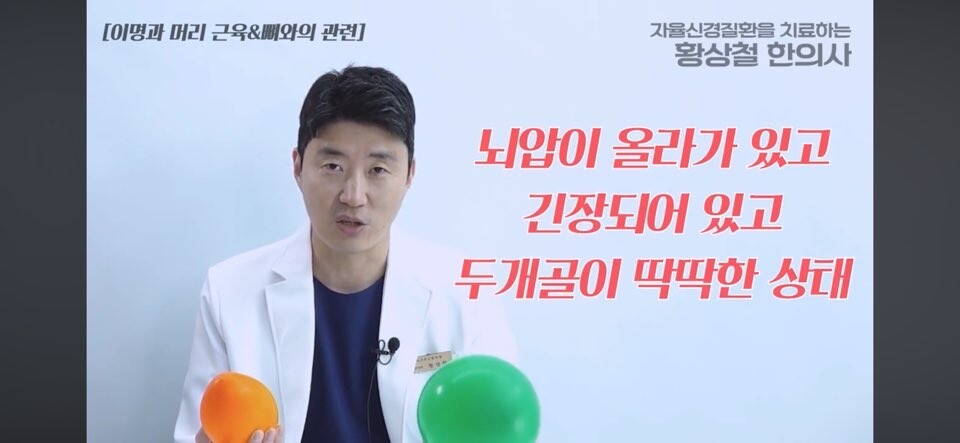
Why Head and Skull Tension Causes Tinnitus
The hearing organ in your ear is very sensitive.
In particular, the hair cells that convert sound into electrical signals
can be easily sensitized by reduced blood flow or increased pressure.
But when the muscles in your entire head and skull are overly tense
brain pressure increases, blood flow decreases,
the environment around the auditory nerve becomes unstable.
I often describe this state as a “balloon”.
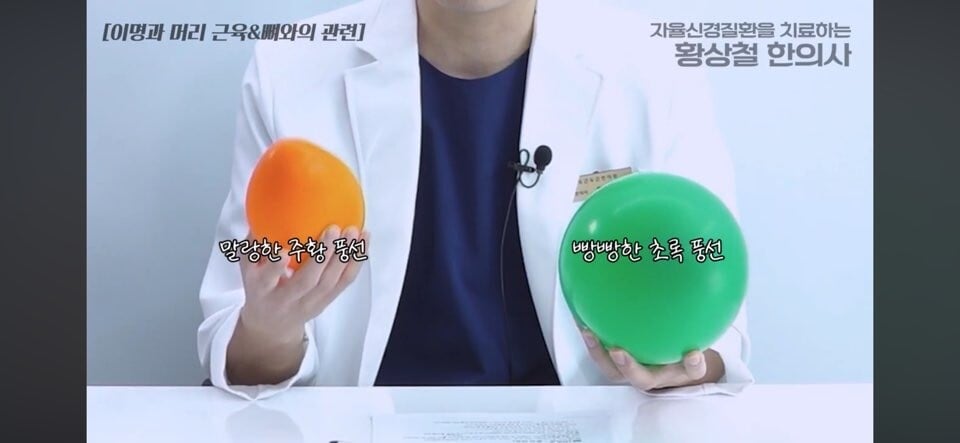
Balloon analogy
– Bunched up balloon = head with excessive tension buildup
– Moderately fluffy balloon = well-circulated, relaxed hair
Most people with tinnitus have a head that feels like a puffy balloon
like a bloated balloon.
This is because the skull, fascia, and muscles are tight and rigid.
preventing normal nerve flow.
The result.
poor blood circulation → compression of the auditory nerve → production of false signals → tinnitus
.
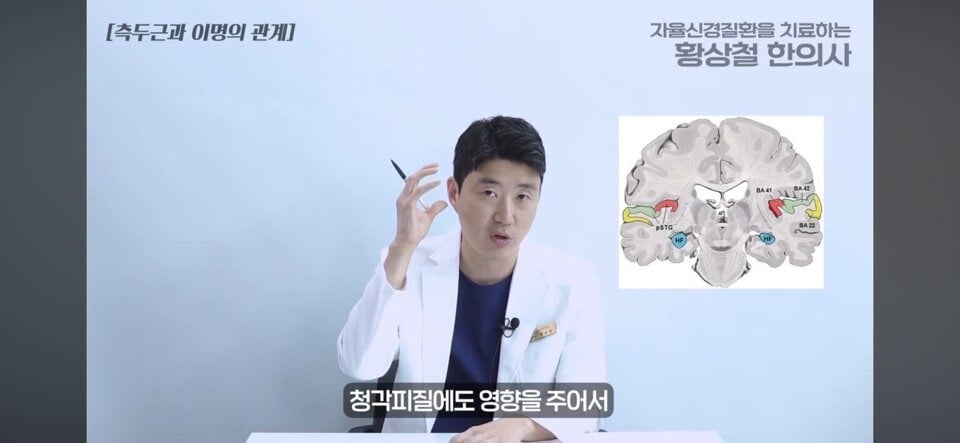
Temporalis muscle and temporal bone problems are closely linked to tinnitus
The temporal bone is the bone closest to the ear,
and the “trigeminal nerve” passes over it.
This nerve is also involved in the jaw, facial muscles, and sensation around the ears.
When the temporalis muscle tightens or the skull becomes misaligned.
pressure on the nerves around the ears
which can cause popping, buzzing, and ringing.
Inside the temporal bone is the
– auditory cortex
– amygdala
– pituitary gland
are located there.
When these areas are tense, they “distort and interpret” sounds,
and create sounds that aren’t really there.

Tension in the occipital bone can also cause tinnitus
Behind the ear, under the occipital bone
is the gateway for the cranial nerves and spinal cord.
When these areas are clumped together
the flow of autonomic nerves is blocked,
tinnitus, as well as
headaches, dizziness, and insomnia.
Because of this, when I treat
temporal bone, occipital bone, jaw joint, and cervical spine.
Why skulls matter
The skull is not one solid bone
but rather a structure of many bones with microscopic movements.
These small movements
cerebrospinal fluid circulation and neural stability.
But if stress, postural imbalances, jaw muscle tension, etc.
the skull becomes rigid and stiff.
circulation drops and pressure rises
which can make tinnitus worse.
Skull self-care at home
────────────────────
Relaxing the tension around the skull and ears can help
Tinnitus symptoms may stabilize faster than expected
────────────────────
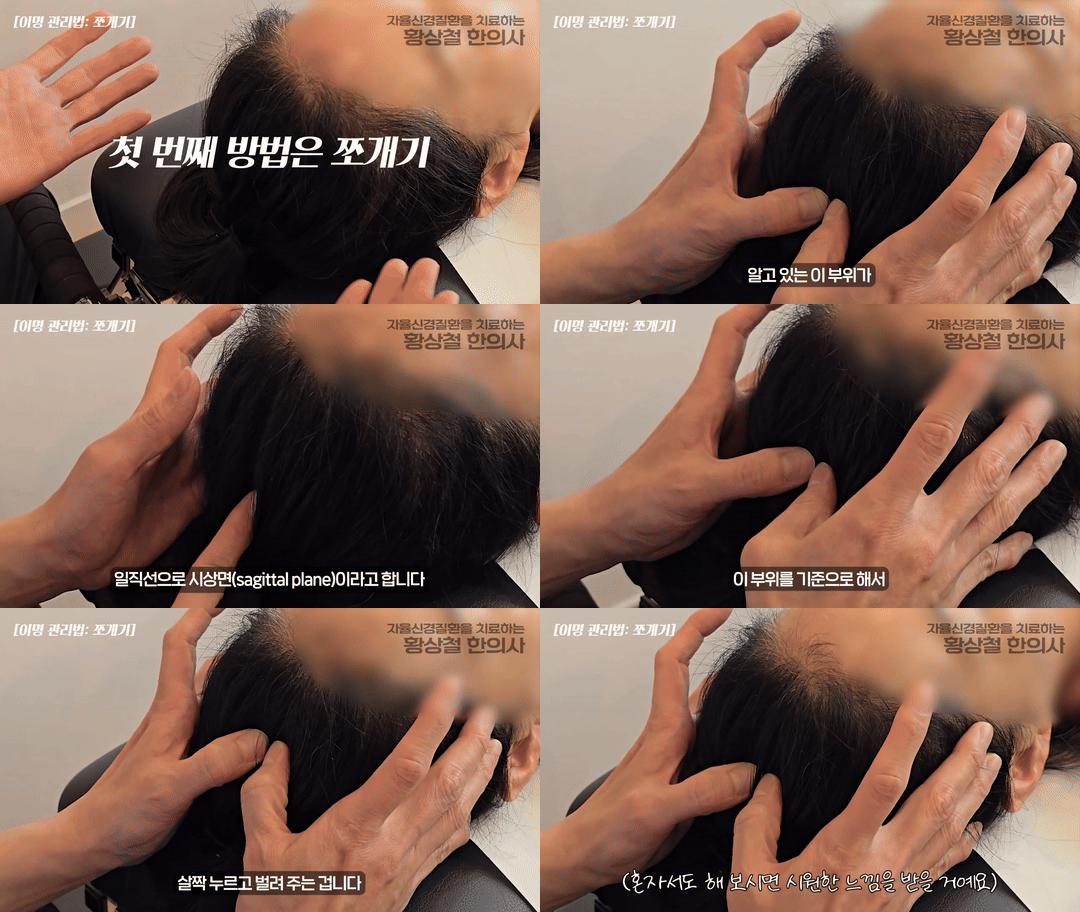
1. splitting technique
Place your thumbs lightly on the crown of your head and
and apply pressure that feels like you’re gently opening an apple.
Repeat gently for a minute or two to help
the cranial sutures relax and
head pressure is relieved.
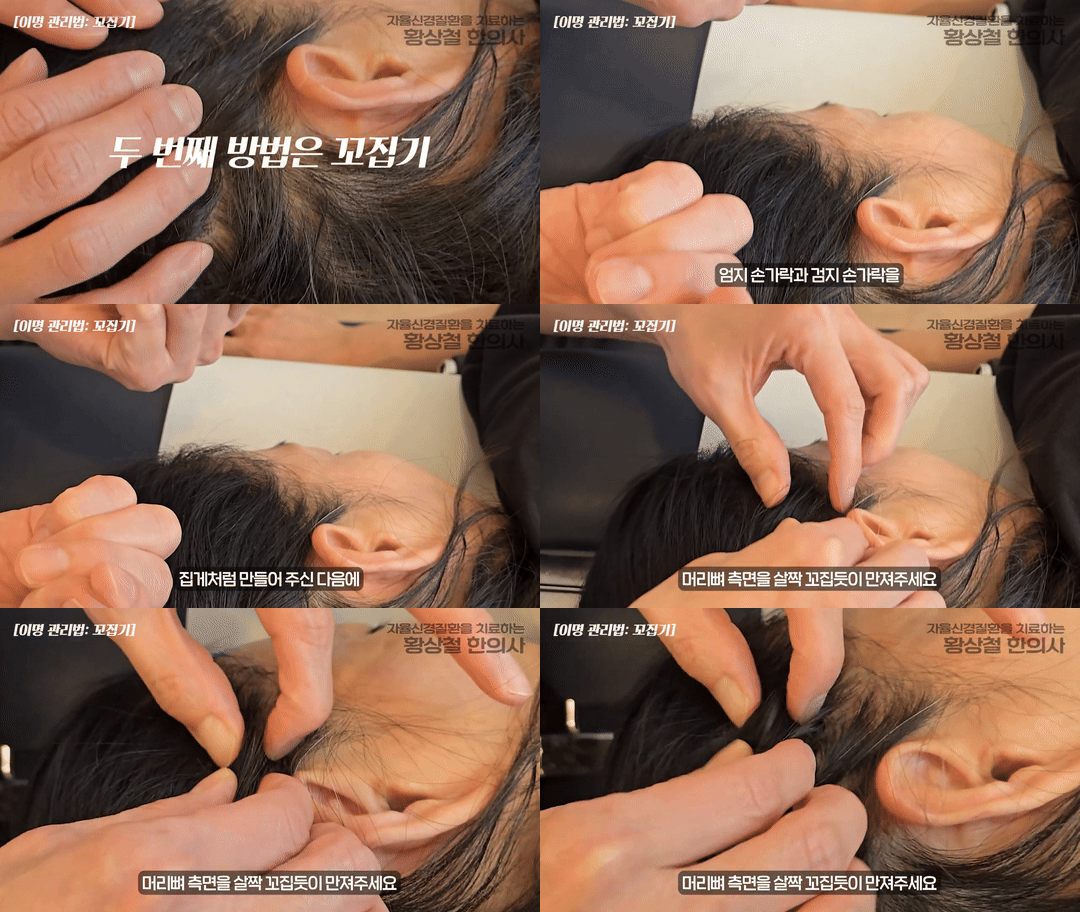
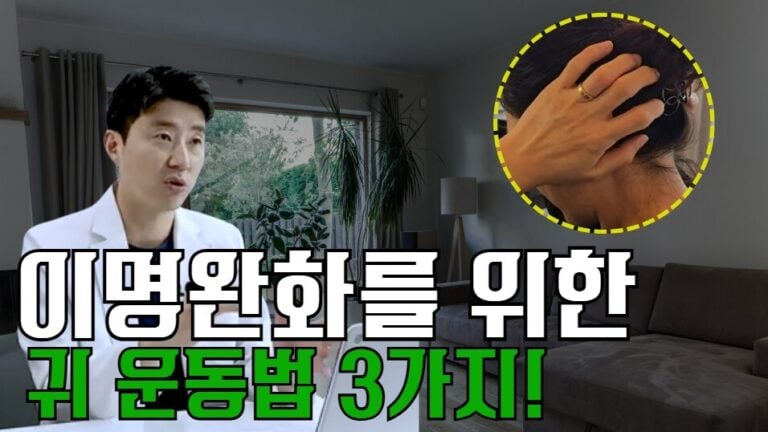
2. pinching technique
Gently pinch the skull around your ear with your thumb and index finger.
This is especially important at the base of the occipital bone behind the ear
where nerves and blood vessels are concentrated
Gentle release can go a long way toward stabilizing tinnitus.
Key takeaways
– Tinnitus May Be a Tension Problem in the Whole Head, Not Just the Ears
– Tension in the temporal and occipital bones can destabilize the auditory nerve.
– Tinnitus can worsen when the smallest movements of the skull are blocked.
– Treatment shouldn”t be limited to the ears, but should also address the skull and autonomic nerves.
– Cranial relaxation techniques, such as splitting and pinching, are useful for tinnitus relief.
If you follow these tips consistently
you’ll notice that your head feels lighter and you’ll notice
and less noise.
If you have any questions, feel free to leave a comment.
Tinnitus isn’t just a problem with your ears
it’s often a signal from your head.
Be gentle with your head,
and stabilize your body.
────────────────────