

Ear Exercises You Need to Know to Relieve Tinnitus
Are you bothered by the sounds you hear in your ears even though they seem fine on the outside?
Especially when tests show nothing wrong,
but you can’t talk to anyone about it, so you keep it to yourself.

hello.
I’m Dr. Sangchul Hwang, an autonomic nervous system researcher and therapist.
Tinnitus is more than just a “bad ear”.
It’s a complex interconnection between the ear, brain, autonomic nerves, and the muscles and circulation surrounding the nerves
the muscles and circulation surrounding the nerves
it’s important to look atit from a whole-body perspective.
Today, I’m going to share with you an exercise that many people can do right at home
that many of you can do right at home and have actually helped patients reduce tension and tinnitus
auricular exercises that many people can do at home and that have actually helped patients relieve tension and reduce tinnitus.
But first,
“Why do ear exercises help with tinnitus?”
Once you understand that, they’ll be more effective.
Tinnitus, why can’t we just look at our ears?
The most common question we get is, “Why do I keep hearing tinnitus even though my doctor’s tests are normal?
“My ears are fine, so why do I keep hearing a beeping sound?”
“Is there any treatment available?”
Tinnitus occurs for a variety of reasons, but many sufferers have something in common.
1. the hair cells themselves are intact or mildly damaged
Hair cells are tiny tissues that turn sound into electrical signals,
and are rarely severely damaged in practice.
2. the brain ‘over-amplifies’ the signal coming from the ear
Stress, sleep deprivation, accumulated fatigue, and autonomic imbalance can cause
can excite the auditory cortex of the brain and create “sounds that aren’t there”.
This is called neuroplasticity in the brain.
3. because tension in the nerves and fascia around the ear is transmitted to the ear
Tight jaw and neck muscles, such as the latissimus dorsi and sternocleidomastoid muscles, can irritate the
vagus nerve, trigeminal nerve, and facial nerve,
The ears can become sensitive, which can increase the intensity of tinnitus.
In other words, treating the ear alone won’t solve the problem.
“ear-nerves-brain-muscles-autonomic nerves ” are all connected.
So in real-world practice
You don’t just look at the ears, you look at the head, neck, jaw, and rib cage.

The process of improving tinnitus in real life
A female patient in her late 30s says
“My ears are deafening and I hear beeping all day long.”
with the following symptoms
There were no abnormalities in her medical tests,
but she was under extreme stress and overwork.
The direction of my practice was not just to treat the ear.
- Relaxing the nerves around the ear
- Relieve pericranial fascial tension
- Correcting neck and jaw muscles
- Autonomic Stabilization
- Relieve constitutional tension
together.
As the treatment progressed, the deafness decreased → tinnitus intensity decreased → whole body tension decreased,
and the discomfort of daily life was greatly reduced.
As this case illustrates
tinnitus requires a “process of restructuring and stabilizing the nerves.”
───────────────
Ear Exercises to Help Relieve Tinnitus
───────────────
Ear exercises have long been studied in both Eastern medicine and neuroanatomy
and neuroanatomy.
The ears are densely packed with vagus, trigeminal, facial, and sympathetic nerve fibers.
stimulating the ears can directly help stabilize the autonomic nervous system and relieve brain function.
The three ear exercises below
are also the ones that patients say they “felt the most immediate change.”
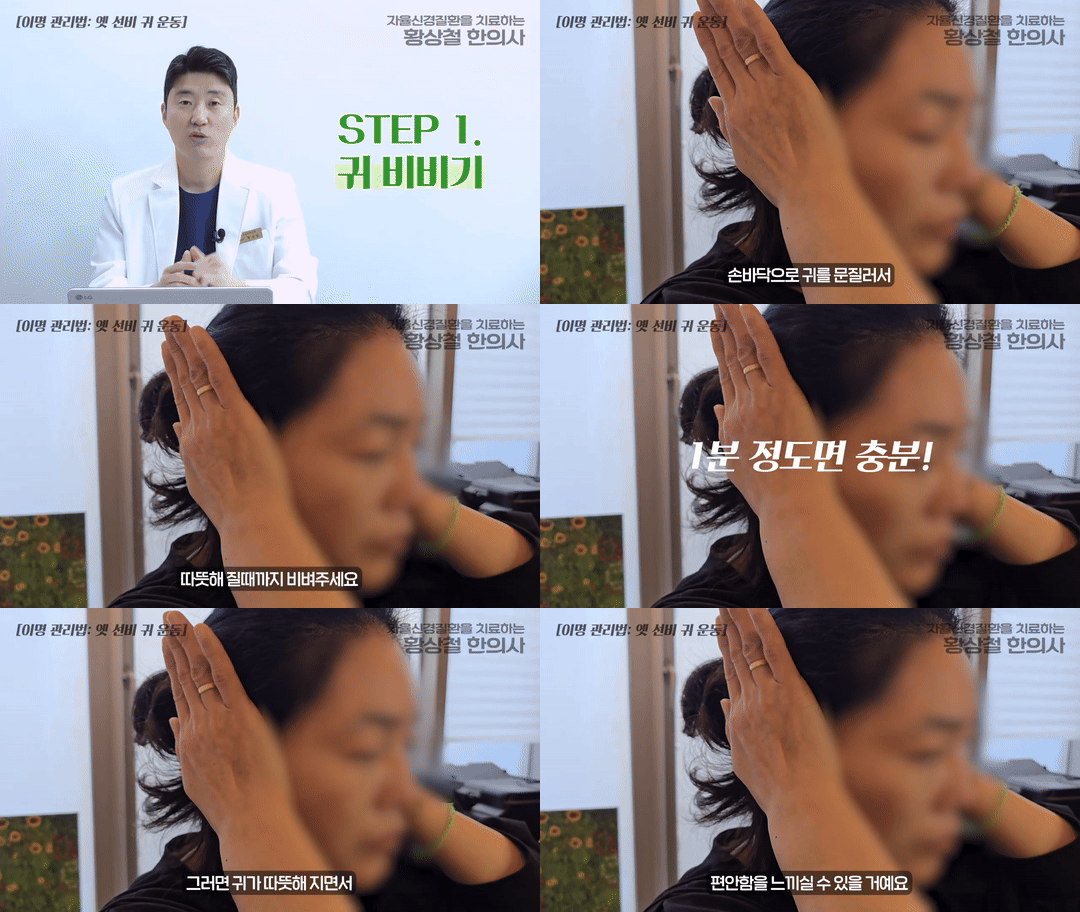
Step 1. Ear rubbing – regulates blood flow and temperature
Wrap your entire palm around your ear
and rub gently until warm. (1 minute)
This behavior is called
- Activate blood flow around the ear
- Stabilize the vagus nerve
- Relaxing the auditory cortex
of the auditory cortex.

Step 2. Ear Pulling – Nerve-Myofascial Release
Stretch your ears by gently pulling up, down, and sideways for 10-15 seconds (1 minute total).
This behavior is called
- Relaxing the fascia around the ear
- Calming overactive nerves
- Reduce jaw-neck tension
to help reduce jaw-neck tension.
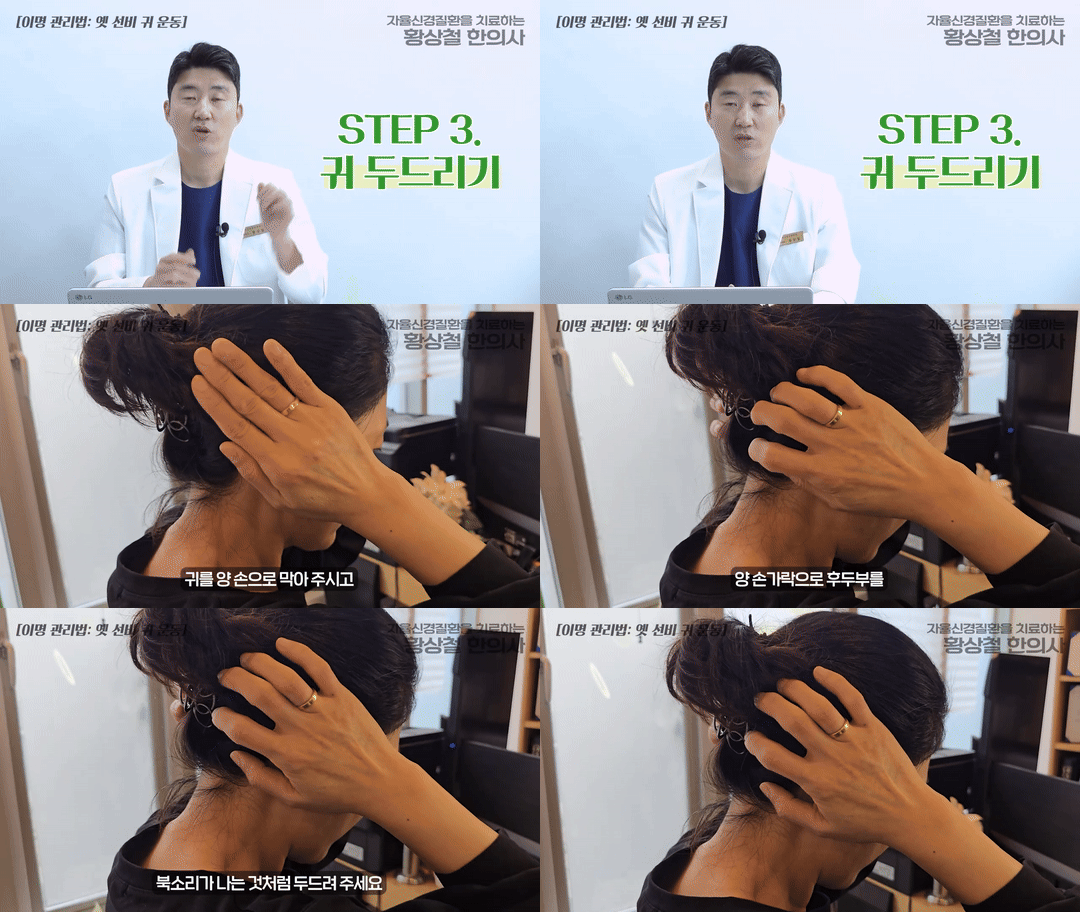
Step 3. Ear tapping – stimulates the auditory region of the brain
Cover your ears slightly with both hands
tap the back of your head with your fingertips. (1 minute)
The “ringing” inside your head is a sign that you’re experiencing
lowers the tension in the auditory cortex of the brain
and gently regulates circuits that are overactive with tinnitus.
──────────────
Why ear exercises work
──────────────
- Your ears act as sensors for your autonomic nerves
The vagus nerve around your ears directly regulates your body’s tension levels. - Stimulating the ear triggers the brain’s reward circuitry
Tinnitus is an “overexcitation” of the auditory circuitry,
ear exercises act to naturally reduce this overexcitement. - When myofascial (muscle membrane) tension is released, ear symptoms also stabilize
When the fascia of the jaw, neck, and occipital region is released
the compressive stimuli sent to the ear is reduced.

Ear Exercises + Physical Fitness = Better Together
Ear exercises alone won’t cure all tinnitus,
it’s much more effective if it’s managed in conjunction with other systemic issues, such as
- Stress-sensitive constitution
- Irregular sleep patterns
- Sympathetic hyperactivity
- Neck-jaw muscle tension
- Cold hands and feet with indigestion
When combined with herbal medicine, acupuncture, chuna, or autonomic nervous system stabilization therapy
ear exercises tend to work more quickly.
Wrapping up
Tinnitus is not an “ear disease
It’s a complex signal from the ear-nerve-brain-muscle-autonomic nerveconnection.
It’s a really tough condition to deal with alone.
but understanding the cause and restoring balance throughout the body
it can make your life much less uncomfortable.
Ear exercises are a great place to start.
Spend three minutes starting today.
If you have any questions or difficulties
feel free to leave a comment.
We’re rooting for your recovery.