

Table of Contents
hello. I’m Dr. Sangchul Hwang, an autonomic nervous system researcher and therapist. Many people who are being treated for hyperhidrosis are wondering what causes hyperhidrosis and whether surgery, medication, or Korean medicine is the right treatment for them. There are different things to keep in mind depending on the treatment method, so today, I’m going to give you an overview of compensated hyperhidrosis, side effects of medication, and Korean medicine treatment approaches.

What is compensated hyperhidrosis?
Compensatory hyperhidrosis is a condition in which a person with hyperhidrosis, primarily hyperhidrosis of the hands and feet, experiences less sweating on their hands and feet after surgery, but instead experiences a dripping back or a significant increase in sweating on their chest, lower back, and trunk. Statistically, the prevalence of compensatory hyperhidrosis varies from about 40% to 70%. The surgical site is usually the sympathetic ganglion T2 or T4, in the past we used to resect a lot of T2, but nowadays we often resect T4 because of the higher risk of compensatory hyperhidrosis. But importantly, if compensatory hyperhidrosis occurs after surgery, the outcome is “100% for the individual”, meaning that the decision must be taken very carefully, considering that it is uncertain whether it will occur or not.
In addition to surgery, it is also not uncommon to find that cream-based topical treatments reduce sweating on the hands and feet but increase sweating on the back instead, or that underarms improve after laser treatment for hyperhidrosis but sweating increases in other areas. It’s important to understand that if you forcibly stop sweating in one area, the body may react by trying to sweat through another area.
How to treat hyperhidrosis in the hospital
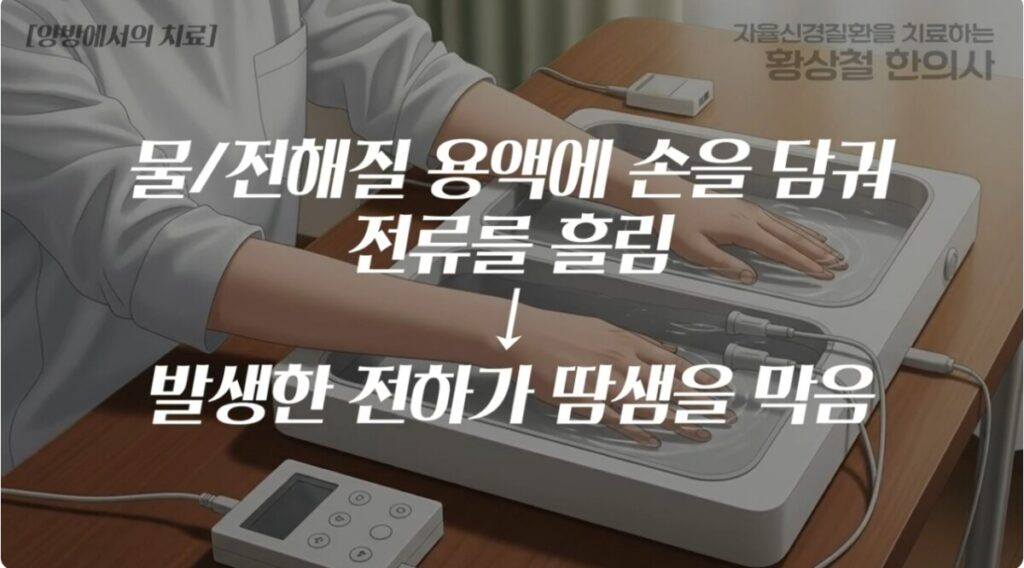
The first is iontophoresis treatment. It involves running an electric current through your hands while they are immersed in a water or electrolyte solution to slow down the sweat glands, and has the advantage of being relatively accessible. However, it requires consistent, repeated treatments, and symptoms are likely to return if you stop.
The second is Botox treatments. It reduces symptoms by weakening sweat glands in the palm of the hand or in specific areas, but the procedure can be painful and can temporarily weaken hand strength, making it difficult to perform daily activities, and repeat treatments are required.
Finally, there is sympathectomy or clip block, which can have an immediate effect but should be chosen carefully due to the high risk of developing compensatory hyperhidrosis and the difficulty of recovery or regeneration after nerve ablation. In clinical practice, there have been cases where patients have improved their hand and foot hyperhidrosis after surgery, but their gustatory hyperhidrosis has worsened, causing them to complain of painful sweating explosions whenever they eat.
Medications for hyperhidrosis, what to look out for?
Glycopyrrolate (an anticholinergic drug) is a common medication. It works by blocking the link between acetylcholine, which is released during sympathetic nerve activation, and sweat glands, reducing sweat production. However, it often causes systemic dryness symptoms such as dry eyes, constipation, and dry mouth, and there are reports that long-term use may affect cognitive function. Therefore, it is recommended for short-term use only when symptoms are very severe.

Lifestyle habits that make hyperhidrosis worse
Sleep is one of the most important aspects of my treatment process. Patients who maintain a regular sleep schedule are more likely to respond to treatment and maintain it, but irregular sleep and excessively late bedtimes often result in poor treatment outcomes. We recommend going to bed before midnight if possible. Sleep deprivation can lead to hot flashes, fatigue, and autonomic imbalance, which can ultimately work to exacerbate hyperhidrosis.
Another important factor is posture. A turtle neck, rounded shoulders, and narrow rib cage place constant tension on the muscles and nerves, which can make it difficult to breathe deeply, build up rib cage heat, and trigger sympathetic nervousness. Treatment for hyperhidrosis should ideally begin with posture correction.

Different types of hyperhidrosis depending on your body type
They are prone to sympathetic hyperarousal and often have nervousness, anxiety, palpitations, and hyperhidrosis. They are often associated with sleep sensitivity and panic symptoms.
Taurus has a strong tendency to accumulate fluids and wastes, often accompanied by generalized hyperhidrosis, sticky sweat, and constipation. The stool condition should be corrected together for a better response to treatment.
Noisy people often have weakness, night sweats, cold, and indigestion, so we focus on immune and digestive support.
Sun people may have an upper body heat-sympathetic pattern, similar to that of Oxalians.
Clinically, there is a high proportion of patients who are both a lung and a sun sign, and it is important to consider both constitutional causes and psychological and autonomic conditions.
Hyperhidrosis Causes and Treatment by Age

Chinese Medicine Approaches to Hyperhidrosis Treatment
While Western treatments (surgery and medication) can certainly be effective, there is also the potential for other problems, such as compensatory hyperhidrosis. Chinese medicine takes a cause-centered approach by analyzing your constitution, autonomic nerve patterns, emotional state, and lifestyle. It’s not just a sweat gland issue, it’s a nervous system, sleep, stress, and temperament issue, and the more we can address these factors together in treatment, the better the results will be maintained.
Sweating too much? Take this 1-minute self-test to find out your sweat type!
1-Minute Self-Checklist for Hyperhidrosis