


Table of Contents

Causes of Burning Mouth Syndrome | Hello, I am Dr. Sang-Chul Hwang. I am Hwang Sang-chul, a director who studies and treats the autonomic nervous system.
Are you all perhaps suffering from a burning sensation in your oral cavity without knowing the cause…? If so, are you perhaps taking blood pressure medication? I often hear that after taking blood pressure medication, my mouth gets progressively drier and drier and my tongue burns. If your symptoms are clearly uncomfortable while hospital tests show nothing out of the ordinary, you may wonder if your blood pressure medication may be related to your tongue symptoms. Today, we have compiled a simple summary of the principles behind how blood pressure medications lower blood pressure and why some medications can cause mouth and tongue symptoms.
Not all blood pressure medications work the same
There is not just one type of blood pressure medication, but several types depending on how they work. Broadly speaking, there are drugs that reduce substances that constrict blood vessels, drugs that block signals transmitted to blood vessels, drugs that relax the blood vessel muscles themselves, and drugs that regulate the amount of water in the body. Understanding how this works naturally leads to why certain medications cause discomfort in areas such as the mouth and tongue.

Blood pressure medications most associated with burning sensation on tongue
First, let me explain the angiotensin-converting enzyme inhibitor system of blood pressure medications. Our body has an autoregulatory system that tries to keep blood pressure constant, and at the core of this system is the angiotensin system. In this process, angiotensin-converting enzyme is responsible for creating a substance that causes blood vessels to contract strongly, thereby increasing blood pressure. By inhibiting this enzyme, vasoconstriction is reduced and blood pressure is lowered. This line of drugs is often used not only for high blood pressure, but also in cases of impaired heart function and diabetes mellitus.
The problem is that this enzyme is not only responsible for regulating blood pressure, but also for breaking down a substance called bradykinin. When the enzyme is inhibited, bradykinin accumulates in the body, and this substance has the property of making the nerves more sensitive.
Why does my tongue get hot when bradykinin increases?
Bradykinin can, first, dilate blood vessels, creating a feeling of heat and redness, and second, make pain nerves more sensitive, making even normally non-painful stimuli feel tingling or burning. Third, it activates signaling substances that amplify the inflammatory response, making you more sensitive to stimuli. This can result in symptoms such as a burning sensation in the mouth, a tingling sensation on the tongue, pain for no reason, dry cough, and facial heat. In other words, the blood pressure is well regulated, but the nerves become more sensitive, a structure that can produce discomfort on the tongue.

There are also blood pressure medications in the same system that cause fewer symptoms.
Angiotensin receptor blockers work a little differently. This drug does not stop the production of the offending substance itself, but rather blocks the button that acts on it. As a result, there is no significant increase in bradykinin and relatively little nerve sensitivity reaction or burning sensation in the mouth. It is often chosen as an alternative when angiotensin-converting enzyme inhibitors cause coughing or mouth discomfort.
How do other blood pressure medications affect you?
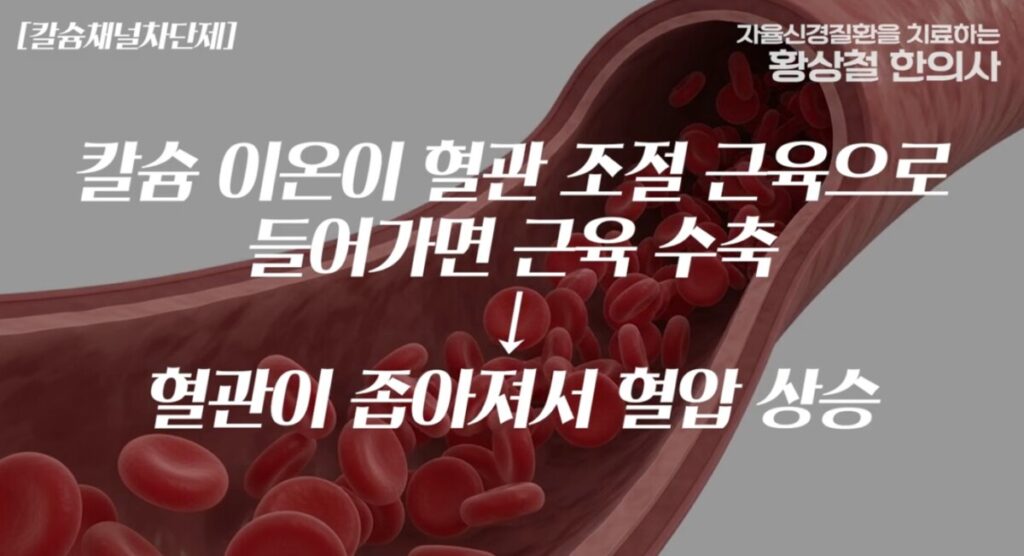
Calcium channel blockers are drugs that block calcium from entering the muscles of blood vessels, causing them to relax. In this case, they do not directly increase nerve sensitivity, but may cause dry mouth and mild sensory changes in some individuals. Diuretics are a way to lower blood pressure by draining water out of the body, so they may cause thirst due to decreased salivation as a result of decreased fluid in the body, but there is relatively little direct association with the nervous burning sensation.
Why is it uncomfortable when tests are normal?
These changes are more akin to changes in functional neurological response rather than a structural problem with tissue damage. As a result, the individual may clearly feel a burning or tingling sensation, even though MRI, blood tests, and other tests show no abnormalities. This is what makes it more frustrating for many people.
Principles that must be followed when there is a burning sensation on the tongue
Most importantly, do not discontinue blood pressure medications alone. You should always consult with your doctor and consider whether other series can be used to regulate the condition. It is also useful to check nutritional conditions such as vitamin B12 iron magnesium, which is important for the stability of nerves and mucous membranes. Lifestyle management is also important. Care should be taken to maintain adequate fluid intake, reduce irritating foods, and avoid over-stimulation of the tongue. Nasal breathing habits rather than mouth breathing can also help reduce oral dryness and nervousness.

This is how Chinese herbal treatment of stomatitis is performed!
If the burning sensation on the tongue and discomfort in the mouth persists in a situation where there is nothing abnormal on examination and a change in medication is ambiguous, an approach that looks at the autonomic nervous system and the nerve hypersensitivity reaction together may be useful. In Chinese medicine, there is a perspective that views the burning sensation in the oral cavity not as a problem of the tongue itself, but as a functional symptom associated with nervous excitation, autonomic imbalance, and decreased systemic circulation. In such cases, the approach is to stabilize the overexcited nerve response through acupuncture and Chinese herbal therapy, and to help restore the salivary secretory environment and oral mucosa. Especially if the symptoms appear after taking blood pressure medication, it is important to alleviate the medication-induced nervous state that has become overstimulated and to adjust the systemic balance together. Since it is difficult to explain oral burning sensation with only one cause, a tailor-made management that looks at the overall lifestyle nutritional status nerve tension level is necessary.
Mouth sores treatment, this is how I do it (summary of constitution, posture, nutrition, and management routine) – Dokudo Kampo Yakuho