

Table of Contents
Breathing exercises to relax the pubococcygeal muscle to relieve anal sphincter syndrome
The core cause of anal sphincter syndrome is muscle overstrain
hello. I’m Dr. Sangchul Hwang, who studies and treats autonomic nerves. Anal sphincter syndrome is often misunderstood as an inflammatory condition, but in clinical practice, it is very often caused by excessive tension in the pelvic floor muscles, especially the pubococcygeus muscle. The pelvic floor muscles are very important muscles that control the function of the anus, rectum, bladder, and urethra, and when these muscles remain in a state of tension, the nerves in the area are constantly irritated, resulting in symptoms such as pain, pressure, foreign body sensation, and bowel discomfort. Stress, prolonged sitting, excessive core exercises, and constant tension are all factors that exacerbate pelvic floor muscle tension.
Why Kegel exercises can actually make your symptoms worse
Many people try Kegel exercises to help with pelvic floor problems, but in the case of anal sphincter syndrome, they often make symptoms worse. Because Kegel exercises are meant to contract the pelvic floor muscles, they can cause the already tight muscles to contract even more. This can lead to increased muscle tension, increased nerve compression, and worsening pain. In fact, it’s not uncommon for patients who are feeling better during treatment to suddenly experience increased pain after starting Pilates or core strengthening exercises, which is caused by increased tension in the pelvic floor muscles. Therefore, exercises that relax the muscles are much more important than exercises that strengthen the muscles in anal sphincter syndrome.

The pubococcygeus is a key pelvic floor muscle
The pubococcygeus muscle is a key muscle in the pelvic floor that connects the pubic bone to the tailbone and is responsible for regulating bladder, urethra, rectum, and anus function. Tension in this muscle can cause a variety of symptoms, including tightness around the anus, perineal pain, discomfort during bowel movements, loose stools, and pain in the sciatic region. Tension in the pubococcygeus muscle can also reduce blood flow to the area and make the nerves more sensitive, causing pain to persist. Therefore, exercises that intentionally relax this muscle can be very important in relieving symptoms of pelvic floor disorders.

Exercises to relax the pubococcygeus muscle
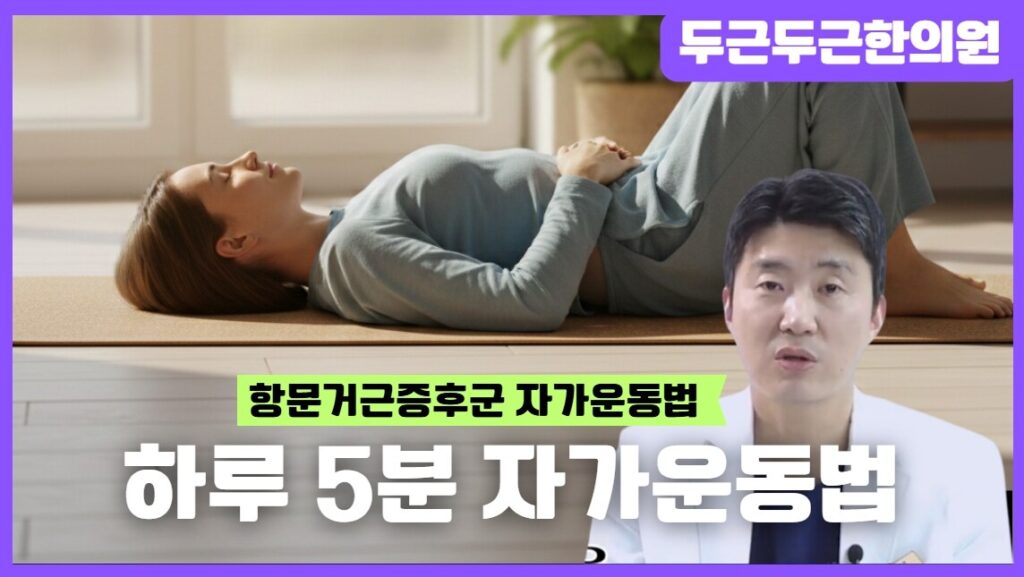
This is a very safe home exercise that can be performed comfortably while lying down. First, while lying comfortably on the floor or bed, lightly bend your knees to reduce tension in your abdomen and pelvis. If necessary, you can place a pillow under your knees to make it even more comfortable. From this position, breathe in slowly through your nose and focus on the sensation of your perineum – the area between your anus and genitals – gently moving downward and relaxing. Then breathe out slowly, maintaining this feeling of relaxation in the area. The important thing here is not to try to contract the muscles, but to focus on the feeling of them relaxing naturally. Repeating this breath for about five minutes can effectively reduce tension in the pubococcygeal muscle.
I thought it was hemorrhoids, but what is it? Causes and Diagnosis – Doojeondooyang Medical Center
The neuro-relaxing effects of breathing
Diaphragmatic breathing is more than just a breathing exercise, it plays an important role in restoring balance to the autonomic nervous system. Deep, slow breathing activates the parasympathetic nervous system, which in turn reduces muscle tension and reduces nerve irritability. Especially since the pelvic floor muscles are closely connected to the autonomic nervous system, relaxation through breathing can be a very effective treatment. These breathing exercises can improve blood flow to the muscles, reduce nerve irritability, and help reduce pain.

The structural connection between the tailbone and pelvic floor muscles
The pelvic floor muscles are directly connected to the tailbone, and the position and tension of the tailbone directly affects the level of tension in the pelvic floor muscles. If the tailbone is excessively curled inward or the surrounding muscles are tense, tension in the pelvic floor muscles can persist. Conversely, when the tailbone is naturally relaxed, the tension in the pelvic floor muscles will also decrease. Therefore, creating a feeling of gentle relaxation in the tailbone through breathing will help to relieve tension throughout the pelvic floor muscles.
Limitations of self-exercise and the need for treatment
While pubococcygeal muscle relaxation exercises are a very effective self-care method, if you already have structural muscle tension or nerve irritability, it may not be enough to improve your condition. In these cases, treatment to assess and relieve structural tension around the pelvic floor, sacrum, and tailbone is necessary. Treatment to relieve tension around the tailbone and reduce nerve irritability is especially important to improve symptoms.
Relaxation is the key to exercises for anal sphincter syndrome
The most important thing to do for pubococcygeal syndrome is to relax the muscles, not strengthen them. Avoid heavy core exercises, Kegel exercises, and excessive strength training, as these can worsen symptoms. Instead, light aerobic exercise, such as walking, along with consistent practice of pubococcygeal muscle relaxation breathing exercises can help improve symptoms.
Finalize
Tension in the muscles and nerves is often a key contributor to pudendalis syndrome, and pubococcygeal muscle relaxation exercises are an important self-care practice to help alleviate this. Regular relaxation exercises to reduce tension in the pelvic floor muscles and stabilize the nerves can help improve symptoms. If you’re struggling with anal pain, perineal pain, or bowel discomfort, we hope you find these exercises helpful.