

hello.
I’m Dr. Sangchul Hwang
researching and treating autonomic nerves.
I have a frequent need to urinate,
and bladder discomfort.
“There’s no inflammation and my tests are normal”
“there is no inflammation and my labs are normal”?
When I take medication, I feel better for a while.
and then the slightest stress or fatigue will bring it back
and the symptoms come back again.
Many people feel exhausted and frustrated.
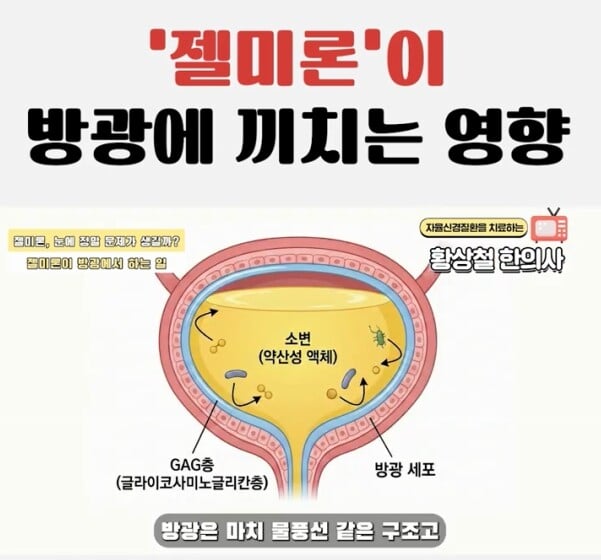
This is often referred to as interstitial cystitis,
especially non-ulcerative interstitial cystitis.
I always ask one more question in the clinic.
“Is it really just a bladder thing?”

What is interstitial cystitis?
Interstitial cystitis is a condition in which there is no bacterial infection or obvious inflammation.
symptoms such as bladder pain, pressure, urgency, and frequency, even though there is no bacterial infection or obvious inflammation
chronically recurring symptomswithout evidence of bacterial infection.
Unlike typical cystitis
No bacteria are detected on urine tests
or endoscopic examination does not show any obvious ulceration or inflammation
or inflammation on an endoscopy.
“If there’s nothing wrong with me, why do I still feel uncomfortable?”
“Why am I still uncomfortable?
In particular, non-ulcerative interstitial cystitis
can often have normal laboratory findings
It can take a long time to be diagnosed
or misunderstood as a psychological problem.
But that doesn’t mean you don’t have symptoms.
People with interstitial cystitis
commonly complain of
Feeling unrelieved right after urinating
A heaviness in the bladder that feels like it’s being pressed down from the inside
Feeling like your bladder is bothering you even if you don’t need to urinate
Waking up frequently at night to go to the bathroom
Tendency to get worse with stress or fatigue

These symptoms are not simply problems with the bladder lining.
they areoften acombination of tension in the nervous system, muscles, fascia, and pelvic structures surrounding the bladder
autonomic nervous system overactivity.
So interstitial cystitis
rather than just “your bladder is either inflamed or not.”
why the bladder remains sensitive,
and what structures and nerves are being repeatedly irritated
structures and nerve impulses are being repeated.
For this reason
even if your test results are normal, if you have clear symptoms
you may need to have your entire body checked again.

─────────────
Your bladder doesn’t hurt alone
─────────────
The bladder is located deep in the pelvis and surrounded by
and is surrounded by bones, muscles, fascia, nerves, and
bones, muscles, fascia, and nerves.
Specifically, non-ulcerative interstitial cystitis can be detected on
urinalysis, endoscopy, or imaging studies
or imaging tests.
However, symptoms are definitely present.
Frequent need to urinate
Feeling a heavy pressure on your bladder
Waking up frequently at night
Recurring discomfort despite medication
If these symptoms persist
the environment surrounding the bladder, rather than the bladder itself
surrounding the bladder rather than the bladder itself.

───────────────
These pains, don’t they come together?
───────────────
When someone comes to the office with symptoms of interstitial cystitis
and ask them a little bit more about it
it’s not uncommon to hear a story like this.
Stiffness in one hip or hip joint
Tingling in the groin or groin area
The sciatic node area hurts after sitting for a long time
These symptoms are more often associated with
pelvic structures or myofascial tension
pelvic structure or fascial tension, rather than a simple bladder condition.

────────────────
Structured Bladder Stimulation in Real World Practice
────────────────
Let me tell you a story about a patient I treated.
After hip surgery
I’ve had frequent urination and bladder pain since my hip surgery.
but his tests were normal and he had little response
and had little response to medication.

A closer look at the body reveals
Pelvic side-to-side asymmetry
Leg length discrepancy
and a structural problem with a lopsided sacrum.
sacrum tilted to one side.
This structural imbalance can cause
nerve and fascial pathways to the bladder
nerve and fascial pathways to the bladder.
Rather than treating the bladder directly
correct pelvic and hip alignment
and release surrounding fascial tension.
Over time, her bladder pressure and
and urinary urgency slowly eased.
While not the same for every patient
that structure affects function
that structure affects function.

────────────────
Fascia, Another Cause of Bladder Irritation
────────────────
The muscles in your body seem to move separately.
but they’re actually connected by a thin membrane called fascia
called fascia.
When the fascia in the hips and pelvis is constantly pulled to one side
that tension can be transferred to the bladder area.
When myofascial tension is prolonged
the flow of nerves and blood vessels is disrupted
resulting in symptoms such as bladder pressure, urgency, and urge urination.
symptoms such as bladder pressure, urge urinary retention, and urinary frequency.
So when a patient comes to me with bladder discomfort.
I always consider the structural issues
structural issues behind that symptom.

─────────────────
If you have any of these symptoms, be suspicious of the structure
─────────────────
I have groin or groin pain
You feel tightness deep in your buttocks
Bladder pressure increases after sitting for a long time
In these cases, it’s hard to explain it away as a problem with the bladder itself.

─────────────
I see the whole body as one
─────────────
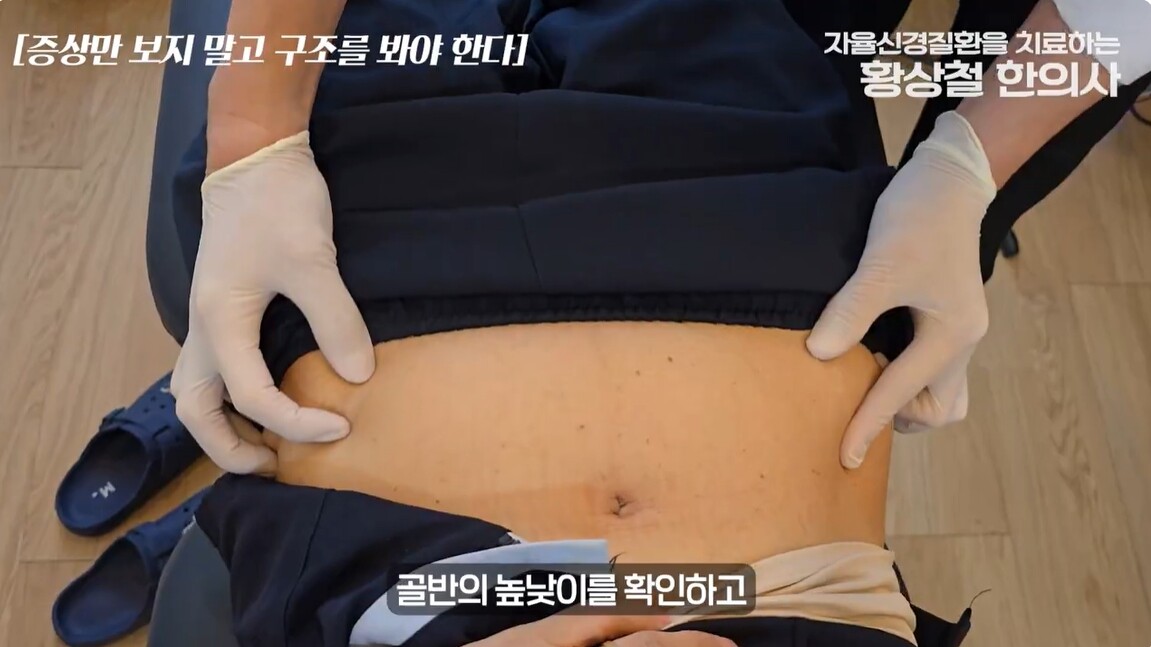
In my practice, I don’t just listen to symptoms.
Pelvic height
Leg length difference
Foot alignment
Tilt of the sacrum
Direction of tension in the fascia
All of these factors are checked together to
to assess which structures are irritating the bladder.
─────────────────
Treatments that stabilize the whole body, not just the bladder
─────────────────
First, Craniosacral Pranayama
relaxes the cranium and sacrum together
to help restore balance to the autonomic nervous system.
Stabilizing the nervous system can lead to less bladder overactivity.
Second, myofascial release therapy
releases tight fascia around the hips, hip joints, and pelvis
to reduce pressure around the bladder.
Third, acupuncture
Acupuncture needles are used on areas of concentrated tension and inflammation to help improve
to improve circulation and aid in recovery.
By working with the structure, nerves, and circulation together in this way
the tension in the body is gradually released
bladder symptoms are often gradually relieved.
──────────────
In closing
──────────────
Frequent need to urinate
and overwhelming bladder discomfort are not
are not necessarily indicative of a problem with the bladder itself.
Pelvic alignment, hip tension, sacral tilt,
fascia and nerve tension.
The whole body must be viewed and approached as one.
Don’t beat yourself up wondering why you’re the only one with these symptoms.
Your body is always sending you signals.
In the next article, we will discuss
self-stretching routine to improve pelvic structure
to improve your pelvic structure.
If you have any questions, feel free to leave them in the comments.
We’ll take it one step at a time.