


hello. I’m Dr. Sangchul Hwang, who studies and treats autonomic nerves. When I see patients who come to me with interstitial cystitis, most of them say, “I don’t know why I feel so uncomfortable even though there is no abnormality in the test.” Today, I will explain what interstitial cystitis is, why it occurs, and how we approach it in our clinic.
What is interstitial cystitis?
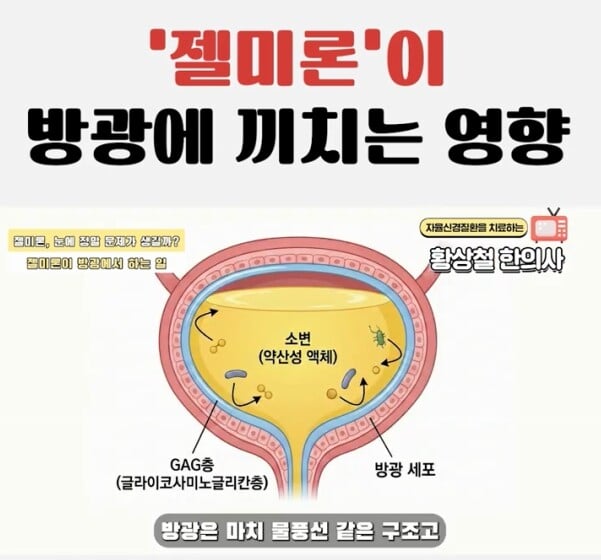
Interstitial cystitis is a condition in which symptoms such as bladder pain, frequency, and urgency persist despite the absence of a bacterial infection. While common cystitis is caused by bacteria and often responds to antibiotic treatment by detecting bacteria in urine tests, interstitial cystitis is often more frustrating for patients because tests don’t show any abnormalities. It’s important to understand that interstitial cystitis is a functional problem with the nervous system that controls the bladder, rather than a simple inflammatory condition.
Symptoms of Interstitial Cystitis
The main symptoms of interstitial cystitis include urgency, which is the need to urinate frequently, residual urgency, which is the feeling of having to urinate without relief, pain in the bladder or lower abdomen, a sensation of increased pain when you need to urinate, and nocturia, which is the feeling of waking up frequently at night. What’s particularly distinguishing is that the discomfort often worsens the longer you hold your urine, and is often temporarily relieved after urination, which can be more than just an inconvenience; it can significantly interfere with your sleep and quality of life.
Causes of interstitial cystitis
Rather than a single cause, interstitial cystitis is often a combination of autonomic imbalances, nerve irritability, chronic stress, poor blood flow to the pelvic area, and constitutional sensitivities. Symptoms often begin or worsen during periods of stress or poor sleep quality, so it’s important to think of it as a condition that is affected by both nervous and systemic conditions rather than a simple bladder problem.
Relationship to the autonomic nervous system
The autonomic nervous system is the system that controls the body’s automatic functions, such as heartbeat, breathing, digestion, and urination, and is maintained by a balance of sympathetic and parasympathetic nerves. However, when stress, overwork, sleep deprivation, or constitutional sensitivities are present, this balance can be disrupted, causing the nervous system to become overly sensitive and overreact to even the slightest stimulus to the bladder, which is why you may feel a strong urge to urinate or experience pain.
Interstitial Cystitis in Chinese Medicine
In Chinese medicine, interstitial cystitis is understood as an imbalance in the entire body, not just the bladder. It tends to be more prevalent in people with a constitution that is easily agitated, who are nervous and sensitive to stress, who have cold hands and feet, poor circulation, and poor sleep quality. In other words, it’s a combination of nervous, circulatory, and constitutional factors that are working together to produce bladder symptoms.
Treatments for interstitial cystitis
Since treating interstitial cystitis by simply eliminating the inflammation is often not enough, it is important to take an approach that restores balance and desensitizes the nervous system. In our clinic, we will take into account your individual constitution and current physical condition and focus on stabilizing the nervous system, improving circulation around the pelvis, and relieving excessive tension, with the goal of gradually reducing bladder overactivity.
Finalize
Interstitial cystitis is not just a bladder condition, it can be a signal from your body. Just because tests show no abnormalities doesn’t mean there’s nothing wrong, there may be a functional imbalance, and it’s important to approach it with that understanding. If you’ve been putting up with discomfort for a long time, it’s worth getting it checked out to help bring your body back into balance rather than going it alone.