


Table of Contents
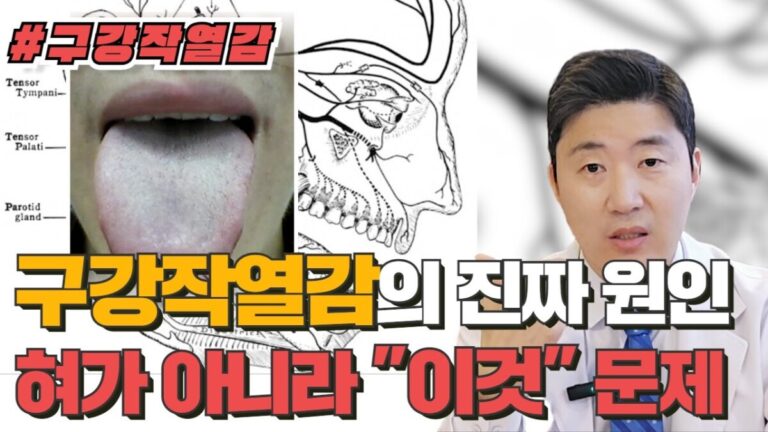
If you start sweating on your forehead, nose, and scalp as soon as you begin a meal, it’s easy to assume it’s simply because “you’re eating spicy food.” However, if you repeatedly experience concentrated sweating on your face and scalp even during ordinary meals that aren’t spicy, you may want to consider a condition known as gustatory hyperhidrosis. Gustatory hyperhidrosis refers to localized sweating—primarily on the forehead, nose, upper lip, face, and scalp—that occurs when eating or chewing food, or in response to specific taste or temperature stimuli.
Hyperhidrosis of the palate isn’t caused solely by spicy foods.
People with hypergeusia may experience symptoms not only from spicy foods but also from hot foods, strongly sour foods, and greasy foods. Some people may even experience a sweating response simply from the smell or visual appearance of certain foods. In other words, the key factor is not the specific type of food, but rather how sensitively the autonomic nervous system reacts to food stimuli. This explains why the trigger foods and the severity of symptoms vary from person to person.
When discussing gustatory hyperhidrosis, it is important to distinguish between two different cases.
When trying to understand hyperhidrosis of the tongue, the first thing to determine is “when the symptoms began.” The script distinguishes between cases that arise primarily from constitutional or personal predispositions and those that develop for the first time following hyperhidrosis surgery.
If you’ve always sweated a lot while eating since you were a child,
If you’ve experienced sweating on your face after eating certain foods since childhood, and if other family members have similar symptoms, you may want to consider whether this is due to a constitutional or individual predisposition. In such cases, you may also experience hyperhidrosis in other areas, such as your hands, feet, or face. A key characteristic is that these symptoms have persisted for a relatively long period, rather than having suddenly appeared after surgery or a specific event.
If it started suddenly after hyperhidrosis surgery,
If you did not previously experience facial sweating during meals but this new symptom appeared within a few weeks or months after surgery for palmar-plantar hyperhidrosis, it is necessary to investigate whether this is related to changes in the autonomic nervous system following the surgery. Following surgery to block the sympathetic nervous system, some patients may experience compensatory hyperhidrosis, characterized by increased sweating in other areas; cases have also been reported where sweating is concentrated on the face and scalp in response to the stimulus of eating. However, the exact pathophysiological mechanism underlying this postoperative gustatory hyperhidrosis has not yet been fully established.
Why do I sweat when I eat?
When we eat, our sensory nerves and autonomic nervous system are activated in response to taste, temperature, and the sensation of chewing. Sensations such as spiciness and heat are transmitted to the nervous system via sensory receptors, and if an individual has a low reaction threshold to these stimuli, even relatively minor stimuli can trigger a significant sweating response. The script explains that the sensitivity of sensory receptors, such as TRPV1, and autonomic nervous system responses may contribute to the severity of symptoms.
However, not all causes of gustatory hyperhidrosis are the same. While abnormal nerve regeneration is a well-established mechanism in Frye syndrome, which occurs following parotid gland surgery or injury, it is difficult to conclude that hyperhidrosis of the tongue following thoracic sympathectomy results from the same mechanism. Therefore, symptoms that develop after surgery require a more careful evaluation of the underlying cause.
Current Methods for Managing Gustatory Hyperhidrosis
Depending on the situation, topical treatments, botulinum toxin, and oral medications may be considered to alleviate symptoms. However, the duration of effect and the need for repeat treatments vary for each option, and in the case of anticholinergic medications, side effects such as dry mouth, constipation, and urinary symptoms may need to be considered. Therefore, it is important to consult with a healthcare provider, taking into account the location and severity of symptoms, pre-existing conditions, and any medications currently being taken.
How does traditional Korean medicine view hyperhidrosis of the tongue?
In traditional Korean medicine, hyperhidrosis is not viewed simply as a problem with a single sweat gland; instead, it is approached by examining the patient’s overall condition, including constitutional characteristics, the distribution of heat sensations, reactions to stimuli, sleep patterns, and stress levels. In particular, it is important to assess whether there is a pattern where a sensation of heat easily rises to the upper body and face and the patient reacts sensitively to stimuli, as well as whether the condition is accompanied by hyperhidrosis or dryness in other areas, or sleep problems.
The key point here is that “the same treatment does not apply to all cases of hyperhidrosis.” Since symptoms present from childhood and those that develop after surgery may have different underlying causes, it is necessary to first identify when the symptoms began and what accompanying symptoms are present.
Taste-related hyperhidrosis: Here’s how to distinguish it
In cases where a constitutional or individual predisposition is suspected, symptoms often begin at a relatively young age, and there are frequently family members with similar symptoms or who also experience hyperhidrosis of the hands, feet, and face. On the other hand, when hyperhidrosis develops after surgery, new symptoms typically begin following the procedure, and compensatory sweating—such as on the torso, back, or lower body—may occur simultaneously. Of course, these characteristics alone are not sufficient to determine the cause, and an evaluation by a medical professional is necessary for an accurate diagnosis.
If you break out in a sweat every time you eat, rather than simply putting up with it or just avoiding certain foods, it’s a good idea to first take stock of when your symptoms began, which foods make them worse, and whether you’ve ever had surgery for hyperhidrosis. Identifying the cause is the first step in determining how to manage the condition.
Check it out right now
I sweat when I eat—could this be constitutional hyperhidrosis? Or is it a change that occurred after my hyperhidrosis surgery?
Use the self-assessment below to quickly determine which type of symptom you’re currently experiencing.
※ The self-assessment is for reference only and does not confirm a disease or replace a diagnosis by a healthcare professional.