

Table of Contents

I thought it was prostatitis… but what if it doesn’t get better even after taking antibiotics?
Hello.
I am Dr. Hwang Sang-cheol, a specialist in the study and treatment of the autonomic nervous system.
Some people visit the hospital because they experience a stinging or itching sensation in the urethra, or a heavy, pressing sensation or sharp, stabbing pain in the perineum.
When you experience frequent urges to urinate along with a sensation of incomplete emptying, most people immediately think of prostatitis.
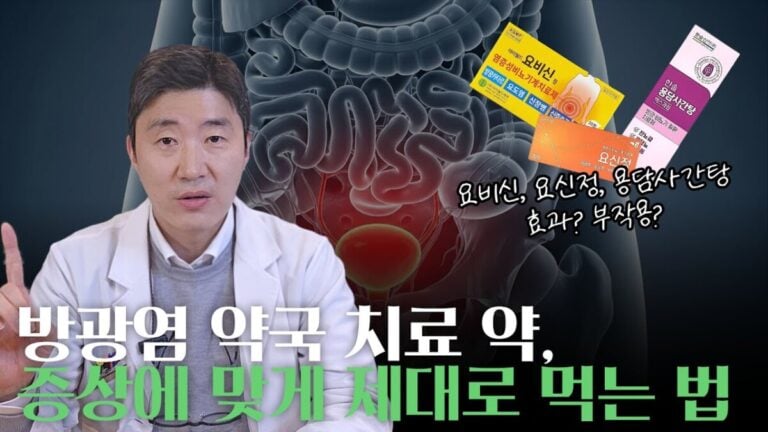
In fact, many people are diagnosed with prostatitis and begin treatment by taking antibiotics or anti-inflammatory medications.
However, the problem arises when symptoms do not change significantly even after several weeks—or, in some cases, two or three months—of treatment.
“Is the inflammation still not healed?”
“Should I take more medicine?”
If you’re struggling with this , it’s worth considering other possible causes as well.
If the condition doesn’t improve even after taking antibiotics for a long time, the cause may be something else.
Prostatitis can be caused by a bacterial infection or inflammation.
In such cases, symptoms often improve with treatment tailored to the underlying cause.
However, if test results show no specific abnormalities and symptoms recur even after taking a full course of antibiotics, the condition may not be easily explained by simple inflammation alone.
Even in my practice, I often meet patients who say, “I’ve been taking medication for several months now because I was diagnosed with prostatitis, but there’s been no change.”
At this point, it is important to also consider neuropathic pain, such as pudendal neuralgia.
What is pudendal neuralgia?
The pudendal nerve is an important nerve responsible for sensation in the perineum, urethra, anus, and genital area.
If this nerve is repeatedly compressed or irritated, various types of pain and abnormal sensations may occur even in the absence of specific inflammation.
Common symptoms include a stinging or itching sensation in the urethra, a feeling of pressure in the perineum, a dull ache around the anus, and a burning or tingling sensation in the genital area.
In addition, because the bladder and pelvic floor muscles are closely connected to the pudendal nerve, it is not uncommon for symptoms such as frequent urination or a sensation of incomplete emptying to occur simultaneously.
If the pain gets worse the longer you sit, that could be an important clue.
There is one characteristic that patients with pudendal neuralgia commonly mention.
“It hurts more when I’m sitting down.”
Symptoms tend to worsen after sitting for long periods on a hard chair while working or studying, and pain may also intensify after driving or riding a bicycle for extended periods.
Conversely, there are some people for whom the pain eases slightly when they get up and walk around for a moment or change their posture.
If there are such distinct changes in your sitting posture and symptoms, it’s important to check whether the pudendal nerve might be under pressure.
If these symptoms keep recurring, you should get checked out at least once.
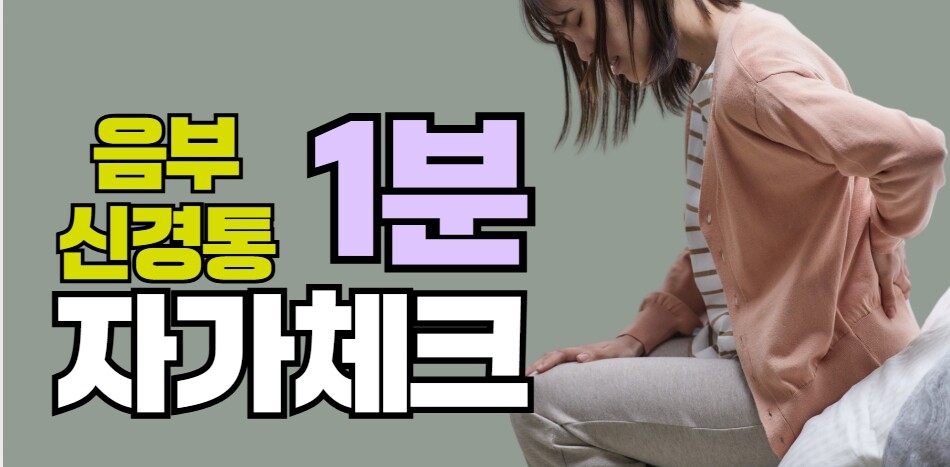
If you experience the following symptoms, it may be helpful to consider the possibility of pudendal neuralgia.
- I experience recurring stinging or tingling sensations in my urethra.
- I feel a heavy or pressing sensation in the perineum or around the anus.
- The longer you sit, the worse the symptoms become.
- I feel the need to urinate frequently, or I have a persistent sensation of incomplete emptying.
- I was told that the test results showed no particular abnormalities.
- I took antibiotics and anti-inflammatory medication, but there was no significant change.
Of course, these symptoms alone are not enough to diagnose pudendal neuralgia.
However, if multiple symptoms occur together, it may be necessary to examine both the nervous system and the structures surrounding the pelvis.
Pain isn’t just a problem with the nerves; it can also be linked to physical tension.
The pudendal nerve runs very close to the pelvic floor muscles.
When the pelvic floor muscles remain constantly tense due to habits such as sitting for long periods, repeated strain, and stress, this can create an environment in which the nerves become more sensitive.
In addition, when the autonomic nervous system is out of balance, you may become more sensitive to pain or experience urinary symptoms as well.
Therefore, even in cases of the same pudendal neuralgia, the nature of the pain and the rate of recovery vary from person to person.
We start by working with you to determine “where the pain is coming from.”
Not all cases of perineal pain are pudendal neuralgia.
Conversely, a diagnosis of prostatitis alone does not necessarily explain all symptoms.
First, we’ll work with you to determine when your symptoms began, in which positions they worsen, whether you have a habit of sitting for long periods, and how your stress levels and sleep patterns are.
We also conduct a comprehensive assessment of pelvic floor muscle tension, autonomic nervous system balance, and lifestyle habits to determine whether the current pain is caused by a nerve, a muscle, or a combination of both.
Rather than focusing solely on reducing pain, treatment takes a step-by-step approach to ensure that the overly sensitive nerves and tense tissues around the pelvis can recover steadily.
I believe that managing lifestyle habits and posture even after symptoms have stabilized—with the goal of reducing the risk of recurrence—is an important part of treatment.
The longer you wait, the longer it may take to identify the cause.
Because perineal pain or urethral discomfort are symptoms that aren’t immediately apparent, many people simply endure them on their own.
However, if there is no improvement even after several months of treatment and tests show no specific abnormalities, it is important to re-examine the cause of your current symptoms rather than simply continuing to take the medication .
Treatment begins with a thorough understanding of the cause.
Rather than putting up with symptoms for too long, taking the time to pay attention to the signals your body is sending can be the first step toward regaining a comfortable daily life.
Symptoms of Pudendal Neuralgia and Self-Diagnosis Checklist (Causes of Perineal and Vulvar Pain)
Please click on the photo.