

Table of Contents
The most common advice people with interstitial cystitis receive
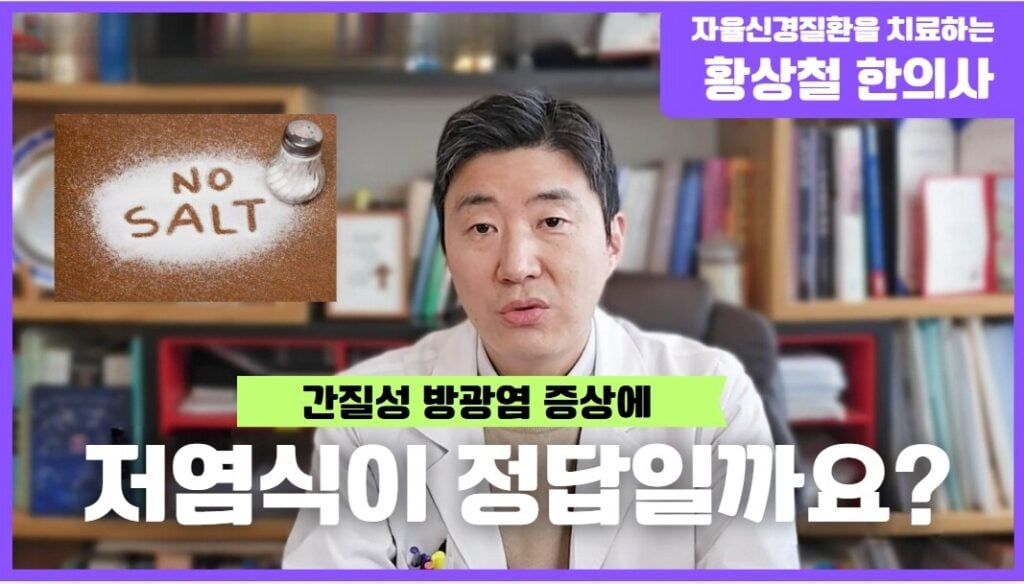
hello. I’m Dr. Sangchul Hwang, an autonomic nervous system researcher and therapist. There is a piece of advice that patients with interstitial cystitis tell me that they hear the most in the clinic. They’re told to drink a lot of water, and they’re told not to eat salty foods, and so a lot of people stay on a low-sodium diet for a long time, and they continue to drink a lot of water, and then they come in and say, “Oh, I’ve been on a low-sodium diet for a few years. “I’ve been on a low-sodium diet for a couple years, and my bladder seems to be more sensitive.” “The more water I drink, the more often I have to go to the bathroom.” Patients are confused. Is a low-sodium diet always the right answer for interstitial cystitis?
Interstitial cystitis is not caused by eating too much salt
First, let’s make one thing clear. Interstitial cystitis is not caused by eating too much salt. It’s caused by a combination of factors, including a weakened protective bladder lining, overactive sensory nerves, and an imbalance of autonomic nerves. However, because people with interstitial cystitis are so sensitive to food, even the slightest irritant can trigger symptoms, so it’s not uncommon for them to be cautious with their diet, and in some cases, even restrict their diet to an extremely low-sodium diet. Of course, eating too much salt is not a good idea, but that doesn’t mean that eating fresh is always a good option for every patient.

Drinking a lot of water can lead to frequent urination
Patients with interstitial cystitis are often advised to drink lots of water in the hospital, and while water is certainly something your body needs, drinking too much of it can actually make your frequency worse. Your body has a homeostatic system that tries to keep the concentration of electrolytes in your blood constant, so when you drink a lot of water, your blood becomes diluted and your kidneys try to quickly excrete this water into the urine. As a result, it’s a natural physiological response to urinate more often the more water you drink. However, if you have interstitial cystitis, your bladder is already very sensitive. In this situation, urinating more frequently can cause the bladder to contract repeatedly, and as the sensory nerves continue to be stimulated, the detrusor reflex can be more easily activated. This can lead to a vicious cycle of repeated urination, which makes the bladder even more sensitive.

Why electrolyte balance is important
There’s one more important part of this. If you’re drinking a lot of water and urinating frequently, you’re not just flushing out water, you’re also flushing out some electrolytes. Your kidneys filter and reabsorb electrolytes like sodium, potassium, and calcium to keep your body’s fluids in balance. However, with repeated frequent urination, the increased loss of electrolytes can upset your fluid balance. That’s why some patients experience a feeling of dryness or poor fluid absorption, even though they’re drinking plenty of water. In other words, just because you’re drinking a lot of water doesn’t mean it’s all staying in your system.
It’s not the amount of salt that matters, it’s the balance
In the end, it’s not just a matter of eating more or less salt, it’s a matter of water and electrolyte balance. Even if you eat salt, if you drink enough water with it, the concentration in your body may not change much. Conversely, if your salt intake stays the same but you drink very little water, your fluid levels may increase and you may actually end up feeling salty. So the key for people with interstitial cystitis is to maintain a stable fluid balance, avoiding heavy drinking habits and avoiding extreme low-salt diets. Once this balance is maintained, your urine production pattern will be more stable and may help alleviate urinary frequency.
A note to those who struggle with bladder issues
Managing your diet while managing interstitial cystitis isn’t as easy as it sounds, and many of us spend every day thinking about what we eat because even the smallest food can trigger a flare-up, which is why I often tell my patients in the clinic: “You’re not sensitive, you just have a sensitive bladder. You’re not sensitive, you just have a sensitive bladder, and you’ve tried a lot of different things and you’re frustrated because you’re not getting better. However, as you continue to restore balance to your body, your bladder will gradually relax. Don’t be too hard on yourself, and take a calm approach to managing your body’s changes. If you’re struggling with your bladder, I hope this article helps you in some small way.