

Table of Contents
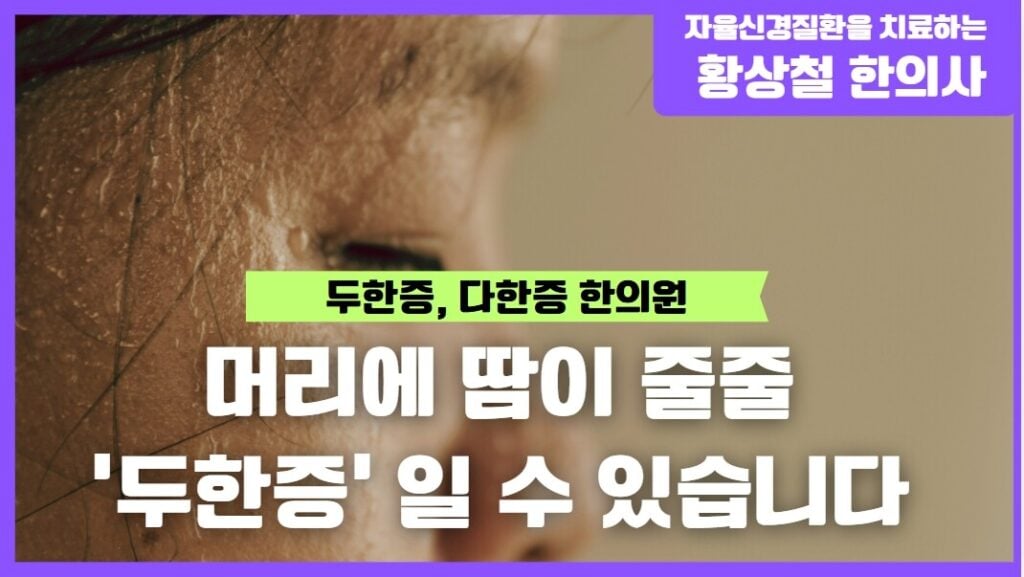
You might say, “What’s the big deal about sweating on your head?” But for those who experience sweat starting at the crown of their head and streaming down their forehead and neck every day, it’s by no means a minor issue. If you find yourself sweating profusely during meals, meetings, or when meeting someone for the first time, it’s only natural to feel self-conscious. Today, I’d like to take a step-by-step look at “duhanjeung”—a condition characterized by excessive sweating concentrated on the head and face—covering everything from its causes to traditional Korean medical approaches.
Hyperhidrosis: Why Does Sweat Concentrate Exclusively on the Head?
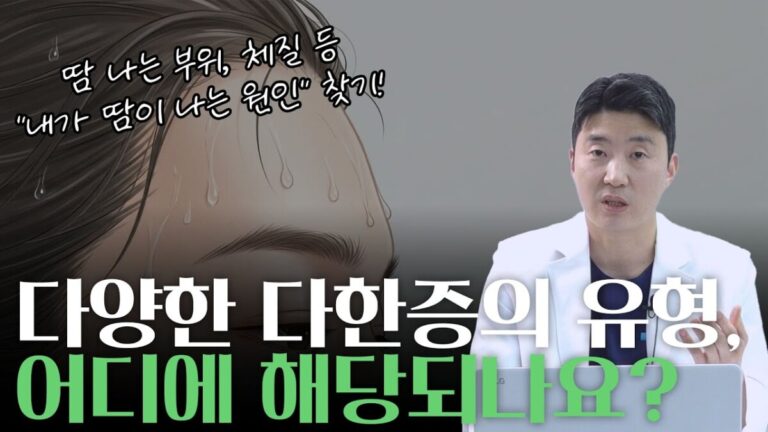
Unlike generalized hyperhidrosis, facial hyperhidrosis is a form of localized hyperhidrosis in which sweating is concentrated on the face and scalp. When I listen to the stories of the people who come to see me, I notice that their experiences follow a very similar pattern. They say that as soon as they start eating, they begin to sweat from the top of their head, and the sweat runs down their forehead and temples; they also say that even the slightest bit of nervousness or standing in front of people causes their entire head to become soaked. Many also mention that this isn’t much different in winter, let alone in summer.
In the past, heat accumulation in the head was viewed simply as a symptom caused by “physical weakness,” and treatments focused primarily on tonifying the body; however, recently, the causes have been examined from a broader perspective. Our bodies regulate body temperature and heat through respiration via the lungs and transcutaneous respiration; if this regulatory function is impaired, heat tends to accumulate in specific areas, particularly the upper body and head. Some studies in the field of Korean medicine have reported cases where nasal breathing function or the condition of the nasal passages were evaluated in patients with head heat syndrome. However, these results alone cannot definitively determine the cause of head heat syndrome, and breathing habits are considered just one of several contributing factors.
Stress and emotional tension are also known to exacerbate symptoms. In my practice, I frequently observe cases where, in situations that cause emotional sensitivity or agitation, excessive activation of the sympathetic nervous system triggers a heightened response in the sweat glands, leading to a worsening of hyperhidrosis symptoms.
If you have these symptoms, you should consider the possibility of a cold head.
- As soon as I start eating, I start sweating on the top of my head or my forehead.
- In tense situations or when meeting someone for the first time, I tend to sweat profusely from my head.
- Sweat is running down my neck and face, enough to ruin my clothes or smudge my makeup.
- I sweat indoors regardless of the season.
- Sweating causes me to avoid social situations, and my confidence takes a hit.
If any of these points resonate with you, I recommend looking into the underlying causes rather than simply dismissing it as “just being a heavy sweater.” This is because untreated hyperhidrosis often leads to social withdrawal or stress as time goes on.
In traditional Korean medicine, cold hands and feet are viewed as follows:
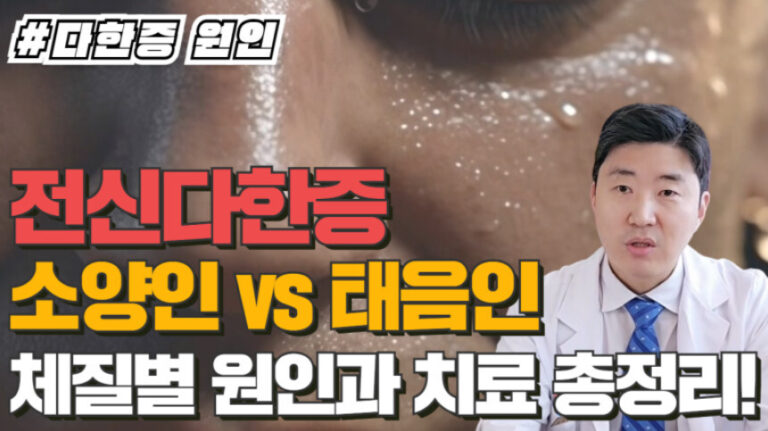
In traditional Korean medicine, night sweats are viewed not simply as a problem with a single sweat gland, but as the result of an imbalance in the body’s overall circulation and heat. Clinically, they are often categorized into three main types.
1. Damp-Phlegm Type
This is a condition in which excess fluid and waste products—known as “dampness”—become stagnant in the body, hindering circulation. It is often accompanied by a feeling of heaviness and swelling, as well as slow digestion and loose stools.
2. Heat Type
This is a condition in which a great deal of heat accumulates inside the body and radiates upward, particularly to the head. It is commonly observed in people who tend to flush easily, frequently feel thirsty, and experience a sensation of heat in the digestive system.
3. Qi Deficiency Type
This type is characterized by a deficiency of energy throughout the body, which weakens the body’s ability to retain sweat—that is, its “go-seop” function. It is commonly seen in people who tire easily even with minimal movement and who generally feel a lack of energy.
Since the approach to treating hyperhidrosis may vary depending on the specific type, it is important to consider the patient’s constitution, the nature of their symptoms, and the timing and patterns of sweating.
A patient with hyperhidrosis whom I met in person
Case A · Thermal Type
Mr. A, an office worker in his 30s, would start sweating from the top of his head at every meal, forcing him to frequently pull out a handkerchief in front of his colleagues. Mr. A, who was usually very sensitive to heat and often felt thirsty, was a case close to the “heat-type” constitution, where heat tends to accumulate in the body. We took an approach focused on dispersing the heat concentrated in his upper body, while simultaneously providing counseling to help reduce his anxiety about dining situations.
Case B · Qi Deficiency Type
Ms. B, a housewife in her 50s, reported that sweating on her head and face had become significantly worse since entering menopause. Ms. B, who typically lacked energy and tired easily, took an approach aimed at replenishing her energy and restoring her body’s ability to regulate sweating; she then monitored her progress while also addressing her everyday fatigue.
Good Habits to Cultivate in Your Daily Life
1. Try to be mindful of your nasal breathing
If you usually breathe through your mouth, it may help to make a conscious effort to breathe through your nose. If you have rhinitis or a stuffy nose, it may also help to treat those conditions first.
2. Prepare in advance for stressful situations.
If you find yourself in a situation where you tend to sweat heavily (such as during a meal, a presentation, or a first meeting), simply taking a moment to breathe deeply or checking the room temperature beforehand can help reduce your anxiety a little.
3. Try to limit your intake of spicy foods and excessive caffeine.
Spicy and hot foods, as well as caffeine, can stimulate the sympathetic nervous system and increase sweat production. If you often feel uncomfortable due to sweating, we recommend taking a closer look at your eating habits as well.
Excessive sweating is not simply a matter of having a “sweaty constitution”; it is a symptom resulting from a complex interplay of factors, including the body’s circulation, thermal balance, breathing habits, and emotional factors. Since the approach to treatment may vary depending on the cause, the first step is to identify which type your symptoms most closely resemble. I hope today’s content has been of some help in taking that first step.