

What if your mouth and eyes feel dry after taking medication for hyperhidrosis?
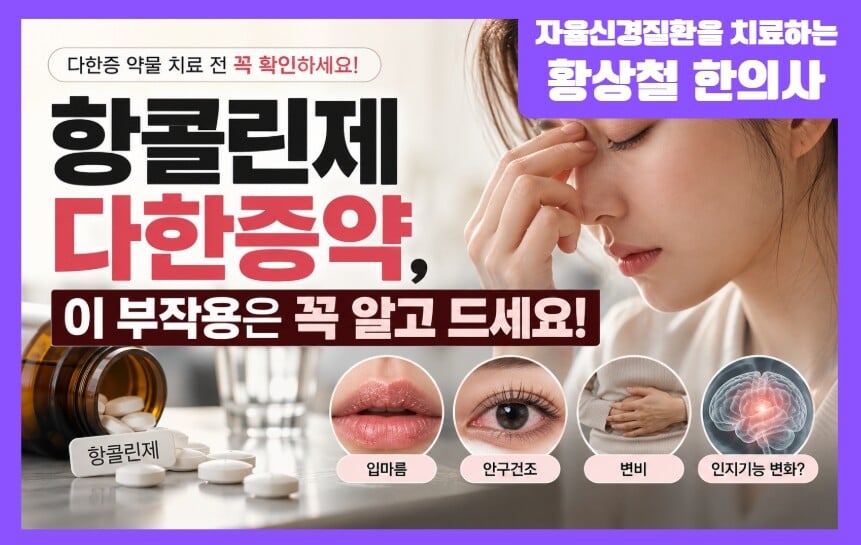
Some people report that after taking medication to treat hyperhidrosis, while their sweating has decreased, they experience a dry mouth, dry eyes, or severe constipation.
To understand these symptoms, you first need to understand how anticholinergic drugs reduce sweating.
Common oral anticholinergic medications include glycopyrrolate and oxybutynin. Anticholinergic medications can be used to reduce sweating by blocking the action of acetylcholine on the sweat glands.
Common Side Effects of Anticholinergic Drugs
Since acetylcholine is not involved solely in sweat secretion, oral anticholinergic drugs can also affect other bodily functions.
Common symptoms include dry mouth, dry eyes and blurred vision, constipation, palpitations, and difficulty urinating.
Therefore, if side effects are making your daily life difficult, it is best to consult with the prescribing healthcare provider rather than stopping the medication or changing the dosage on your own.
How should we view the link between long-term use and the risk of dementia?
A large-scale observational study of individuals aged 55 and older, published in *JAMA Internal Medicine*in 2019, observed an association between high cumulative exposure to certain potent anticholinergic drugs and a diagnosis of dementia.
Previous long-term follow-up studies have also reported an association between high cumulative exposure to anticholinergic medications and the onset of dementia.
However, this should not be interpreted as establishing a causal relationship—namely, that “long-term use of anticholinergic drugs causes dementia.” There are limitations inherent in observational studies , and further research is needed in this area.
In particular, if you are middle-aged or older and have been taking these medications for a long time or are using multiple anticholinergic drugs at the same time, it is advisable to review your current medications with your healthcare provider.
During a medical examination, we don’t just check the amount of sweat.
For example, if you’ve had excessive sweating in your hands and feet since childhood, but recently your face and head have also started sweating heavily when you’re nervous, it’s difficult to address the issue simply by focusing on the fact that you “sweat a lot.”
During the consultation , we will review the onset of symptoms, the areas where sweating occurs, any connection to stress or meals, whether sweating occurs during sleep, as well as heart palpitations, anxiety, sleep patterns, fatigue, and digestive health, along with any medications you are currently taking and your lifestyle habits.
This process isnot intended to demonstrate the effectiveness of a specific treatment, but rather to identify the current manifestations of hyperhidrosis.
How do Korean medicine clinics treat hyperhidrosis?
In traditional Korean medicine, practitioners examine the current characteristics of sweating, the patient’s constitution, and accompanying symptoms. Depending on the patient’s condition, they may combine herbal medicine—which serves as the primary treatment—with acupuncture, herbal acupuncture, and lifestyle management.
In particular, if excessive sweating is accompanied by tension or stress, along with symptoms such as palpitations, anxiety, or sleep problems, we also examine the accompanying symptoms related to the autonomic nervous system.
Treatment generally proceeds through the stages of adaptation → stabilization → maintenance.
During the treatment adjustment period, we monitor changes in sleep, fatigue, digestion, and heart palpitations, along with the amount, location, and timing of sweating, to adjust the treatment plan accordingly.
During the stable phase of treatment, we continuously monitor the situations that trigger excessive sweating and the resulting discomfort in daily life, while also managing any accompanying symptoms.
During the aftercare phase, the focus is on identifying individual factors that can trigger a relapse—such as the season, temperature, stress, sleep, and diet—and learning how to manage lifestyle habits and overall well-being.
Treatment responses and the duration of treatment vary from person to person.
Can I still see a doctor at a traditional Korean medicine clinic even if I’m taking anticholinergic medication?
There is no need to stop taking the anticholinergic medication prescribed for your treatment at the Korean medicine clinic on your own.
During your appointment, it is a good idea to discuss the types of medications you are currently taking and how long you have been taking them, as well as any changes in sweating and any discomfort you may be experiencing, such as dry mouth, dry eyes, or constipation.
You should consult the healthcare provider who prescribed the medication before stopping or changing the dosage of any prescription medication.
If you live far away and find it difficult to visit often,
There are cases where people want to seek medical treatment for hyperhidrosis but put it off because the clinic is too far away.
Depending on relevant regulations and the patient’s condition, telemedicine consultations and the prescription and delivery of herbal medicine may be available; therefore, if it is difficult to visit in person frequently, you can start by checking which treatment options are available.
Rather than giving up right away because of the distance , please start by consulting with us about which type of sweating bothers you the most, whether you’re currently taking any medications, and what side effects you’re concerned about.
You can start by exploring the options available in your current situation and finding a treatment plan that works for you.
1-Minute Hyperhidrosis Self-Check
If sweating from your hands, feet, face, head, or entire body is making your daily life uncomfortable, start by assessing your current hyperhidrosis symptoms.
※ The self-assessment is intended as a reference to help you identify your current symptoms and is not a substitute for a diagnosis by a healthcare professional.