

Table of Contents
What are the root causes of overactive bladder?
An overactive bladder is more than just having to urinate frequently; it’s a condition in which you feel a sudden, strong urge to urinate. While secondary overactive bladder often improves with treatment of other conditions, primary overactive bladder is often more difficult to treat because it is deeply connected to the autonomic nervous system. It requires a different approach that looks at the functioning of the body as a whole rather than just medication.
Are these symptoms occurring together?
Many people with overactive bladder complain of feeling full, cold hands and feet, or a spike in temperature. It’s not uncommon for them to also have other symptoms that suggest autonomic dysregulation, such as body swelling or recurrent constipation and diarrhea. Women in particular often describe feeling “full in the lower abdomen,” which can be an important clue.
The Meaning of “Full Bladder” in Chinese Medicine
Chinese medicine talks about the concept of “cold bladder” as one of the causes of overactive bladder. This doesn’t mean that the bladder actually contains cold water, but rather that the blood vessels and nerves leading to the bladder are underactive. Just as poor circulation to the hands and feet can make them feel cold, poor blood flow and nerve transmission to the bladder can cause the lower abdomen and bladder to become less functional, resulting in overactive bladder symptoms.
Overactive Bladder, Understanding the Symptoms, Causes, and Neuroanatomy – Doojeon Medical Center
Circulation and autonomic issues lead to bladder symptoms
Feeling full, hot and cold flashes, swelling, constipation, and diarrhea are all signs of circulation problems in the blood vessels, nerves, and lymphatic system. When these circulatory problems affect the bladder, the bladder becomes more sensitive and signals to urinate when it’s not full enough. In other words, overactive bladder is not just a bladder problem, but a systemic circulatory and autonomic problem.
Characteristics of overactive bladder seen in the office
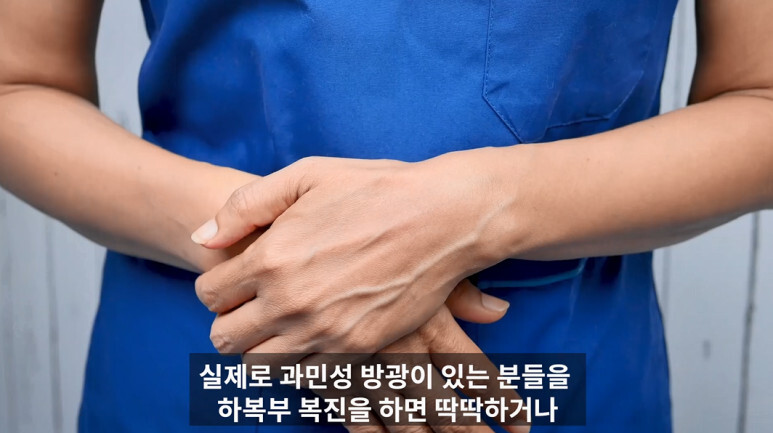
In fact, when we examine people with overactive bladder, we often find that the lower abdomen is often hard or tender, and that muscle tension is often maintained. It’s also common for the sacral region of the buttocks to be stiff and inflexible, suggesting that the function of the sacral nerves that control urination may be affected. In this condition, treatments that only control the bladder will have limited success.
Primary overactive bladder, the direction of treatment is different
Especially in the case of primary overactive bladder, it is not enough to simply use medications or topical treatments that inhibit the bladder muscles; an approach is needed that improves circulation to the surrounding tissues, including the bladder, restores autonomic balance, and normalizes pelvic floor and lower abdominal function together. In fact, the evidence supports this view, showing that exercises that strengthen the pelvic floor muscles are helpful for overactive bladder.
Overactive bladder can be improved with enough
Overactive bladder is a condition that can be improved with an accurate diagnosis and an approach that addresses the cause. It’s important to take a holistic view of why you’re experiencing these symptoms, rather than just treating the symptoms.