

Table of Contents
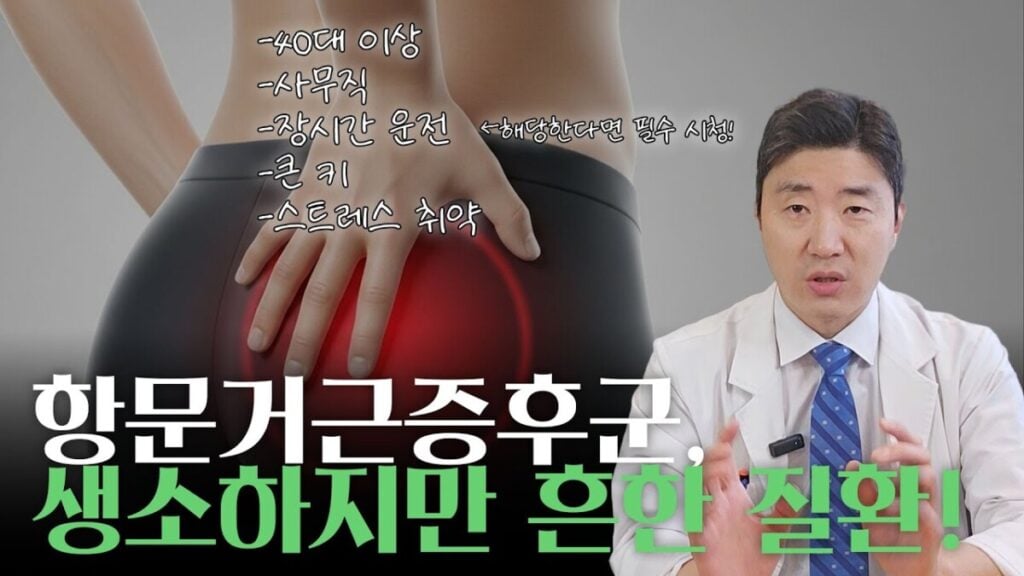
hello. I’m Dr. Sangchul Hwang, who studies and treats autonomic nerves. If you’ve tried ointments and sitz baths, but the uncomfortable sensations around your anus persist, you should definitely consider the possibility that it’s not just a simple hemorrhoid. Especially if you have a residual feeling of loose stool that doesn’t go away after a bowel movement and a dull or stabbing pain that recurs when you sit down, the cause may lie elsewhere. Today, we’re going to take a closer look at a relatively common but little-known condition that is said to affect more than 10 percent of the adult population: anal levator ani syndrome.
The Real Causes of Anal Pain That Ointments and Sitz Baths Don’t Cure
Sometimes you think you have hemorrhoids and apply ointments or take sitz baths with no relief at all. Many people assume this is due to a lack of treatment, but the diagnosis is often different. Anal retentive syndrome is a painful condition caused by overstraining the muscles and nerves around the anus, and is often confused with hemorrhoids because there are no visible hemorrhoids or bleeding. The pain is also characterized by a dull, stabbing sensation deep inside the anus.
What is anal sphincter syndrome?
Anal sphincter syndrome is a condition in which the anal sphincter and pelvic floor muscles that support the anus are in constant tension, irritating the surrounding nerves and causing pain. Because the discomfort occurs in a deep, unrecognizable area, it is difficult to describe and often goes undetected on examination. This can lead to patients dismissing it as a self-induced sensitivity or mistaking it for simple hemorrhoids, leading to missed treatment.
The key is nerves, not muscles
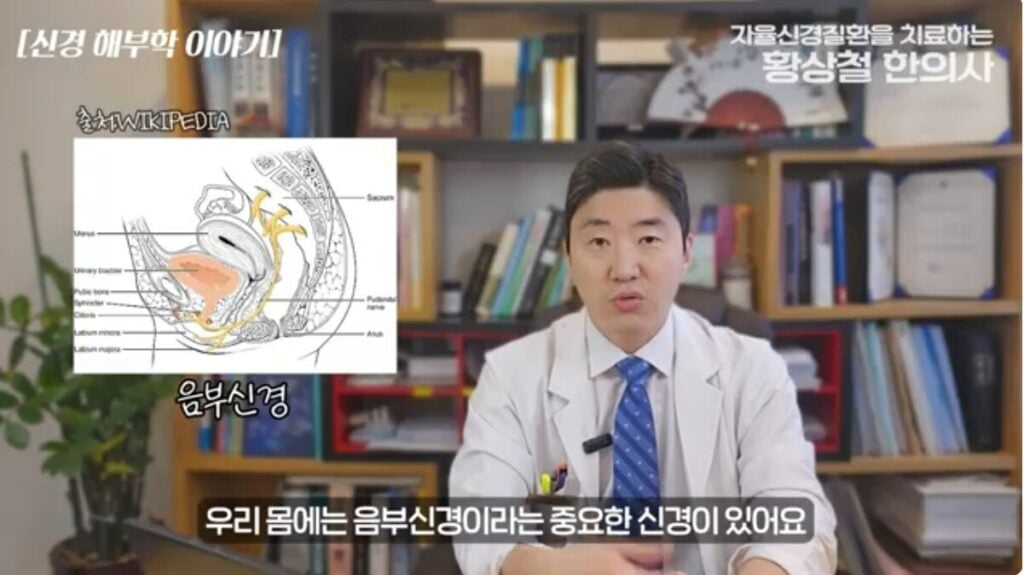
The key to this condition lies in the nerve impulses rather than the muscles themselves. The body has a nerve called the inferior rectal nerve, a branch of the pudendal nerve, which is responsible for sensation around the anus and rectum. This nerve is located very close to the anal sphincter pelvic floor lymphatic structures and is easily irritated when the surrounding muscles are tense or circulation is reduced. The result is a lingering feeling of residual stool after a bowel movement or painful, stabbing nerve pain when sitting down.
Is it just a result of sitting too much?
A sedentary lifestyle can also contribute, but we see some common patterns in our practice. A tall, tense pelvis A tendency to get stressed easily, whether it’s from long hours of driving or a job that involves sitting all day. People who are particularly sensitive to stress tend to tense up not only their shoulders and neck, but also the muscles around their hips and anus. This means that they have a sympathetic nervous system that is hyperactive, which leads to tight muscles, poor circulation, and inflammation, which leads to nerve irritation.
The different symptoms of anal sphincter syndrome
To make matters more confusing, the symptoms of diastasis recti can vary widely. In addition to anal pain that feels like hemorrhoids, the pain can radiate down the lower back to the buttocks and legs, and in some women it can be accompanied by bladder discomfort or urinary urgency. This is why it’s important to differentiate the condition from other conditions, such as spinal stenosis and herniated disc syndrome, and why an accurate diagnosis is so important.
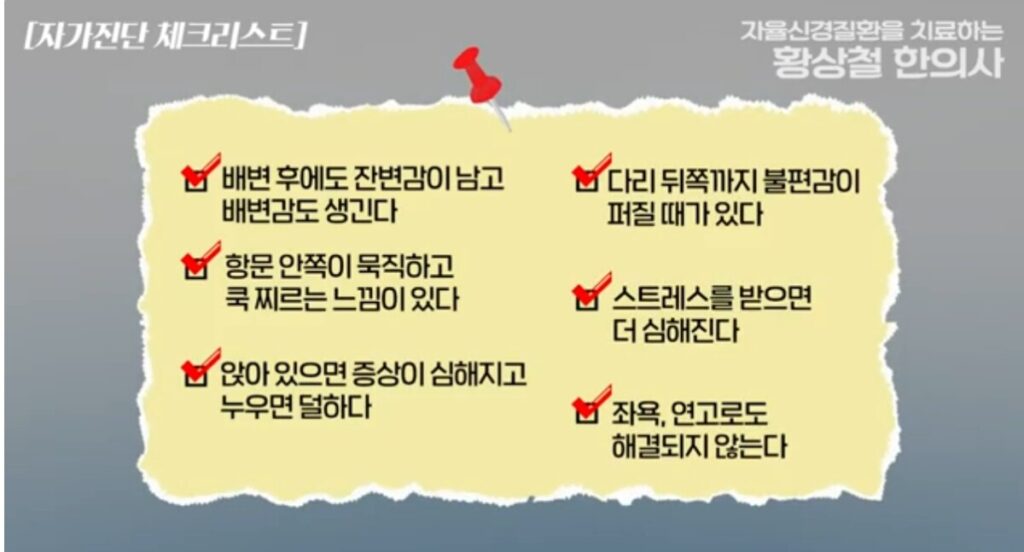
Anorectalis Syndrome Self-Checkpoint
If you feel a heavy or stabbing pain deep inside your anus after a bowel movement, if the pain is worse when you sit and better when you lie down, if the discomfort sometimes radiates to the back of your thighs, if the pain is worse when you’re stressed, and if ointments or sitz baths don’t help at all, you may have piles.
Treatment of anal sphincter syndrome is approached as follows
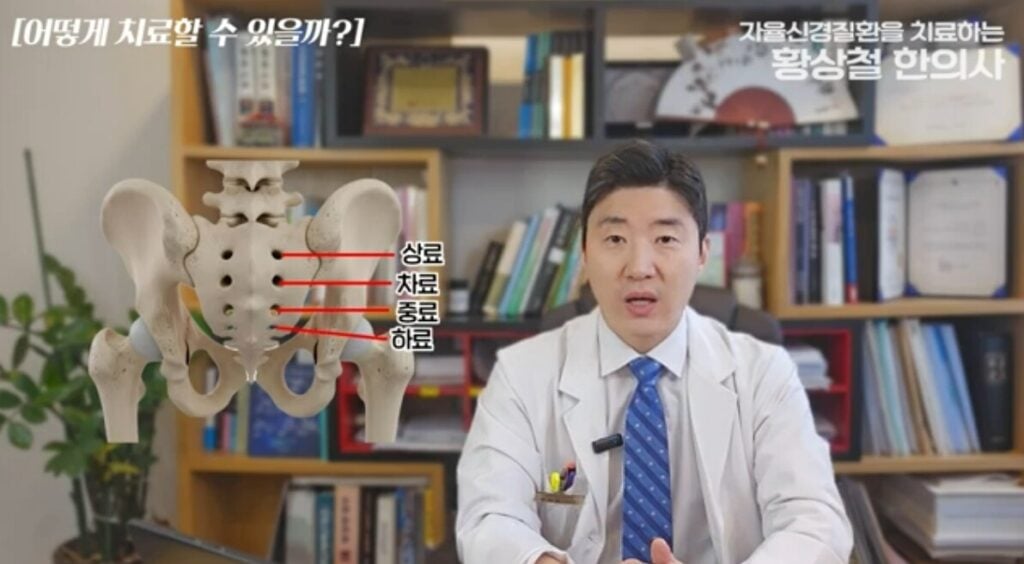
Anal sphincter syndrome often does not improve with ointments or sitz baths alone. My approach is to focus on the flow of nerves from the spine to the anus and combine acupuncture and moxibustion to relieve nerve tension and improve lymphatic circulation. In particular, the Palmyra point, located in the sacral region, is very close to the sacral plexus, where the pudendal nerve passes, and plays an important role in directly reducing nerve tension around the anus. The key is to treat the nerves and systemic circulation together, rather than just looking at the area of pain.
Why Relapses Are Frequent and the Importance of Treating Your Constitution
Anal sphincter syndrome is not just a result of sitting too much; it is more likely to be caused by a sympathetic nervous system that is easily triggered or prolonged exposure to stressful environments. Stress causes the body to tense up, muscles to tighten, circulation to decrease, inflammation to occur, and nerves to become irritated, leading to pain. This is why treating the painful area alone is prone to recurrence and requires an integrated treatment that addresses both constitutional adjustments and systemic autonomic balance.
Treat Anorexia as a sign from your body
Anal sphincter syndrome isn’t a rare condition, and while you may be too busy being embarrassed to admit it, your body is sending you the same signals over and over again. A feeling of heaviness after a bowel movement A heaviness that comes from sitting for too long A piercing nerve pain can be a warning of stress and poor circulation. If you understand these signals and approach them properly, your recovery can be much faster. If you’re suffering from similar symptoms, don’t go it alone – get a diagnosis.