

Table of Contents
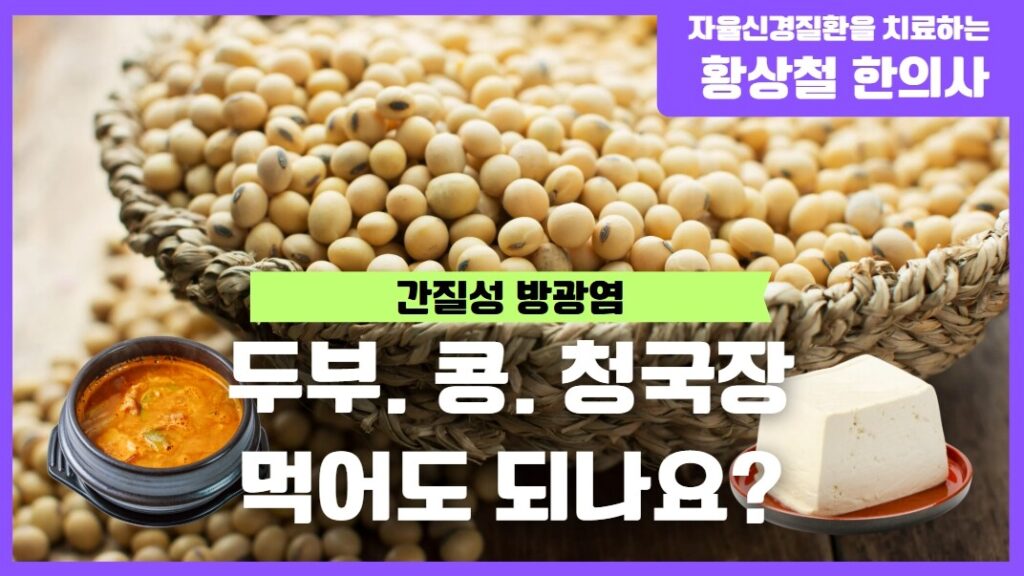
I have interstitial cystitis. Is it okay for me to eat soybeans, tofu, and cheonggukjang?
Hello. I am Dr. Hwang Sang-cheol, a specialist in the autonomic nervous system who treats overactive bladder conditions.
When I consult with patients with interstitial cystitis, there’s one question I get asked much more often than you might expect regarding dietary management. It’s about “beans,” a food that frequently appears on our dinner tables.
“Doctor, I’ve heard that beans are good for you—is it okay to eat them if I have a urinary tract infection?” “It’s strange—tofu is fine, but when I eat boiled beans mixed into my rice, my bladder feels a little uncomfortable.” “I’ve heard that cheonggukjang is good for the intestines, so I’m thinking of trying it, but I’m worried because I’ve seen online that some people said it made their symptoms worse.”
My answer to this question is surprisingly simple: “All of those puzzling reactions you’ve experienced are correct.”
This is because interstitial cystitis is a condition in which reactions can vary greatly from patient to patient, depending on the condition of their bladder lining and nerve sensitivity—even when they consume the same foods. In fact, even in my clinic, some patients report no significant changes even after consistently eating soybeans, while others complain that their frequent urination and sensation of incomplete emptying become sharply more severe starting the evening they eat soybeans.
The reason for these differing experiences is due to a combination of factors, including the type of beans, the cooking method, and the current condition of the patient’s intestines and bladder.
1. Not all beans have the same flavor: Differences depending on the recipe
We often think of “beans” as a single food category, but the beans that appear on our tables come in a wide variety of forms.
There are raw soybeans, thoroughly boiled soybeans, and nutty-flavored roasted soybeans. Some are processed into foods like tofu, while others undergo fermentation to become products like cheonggukjang or doenjang . As you can see, even though they are all soybeans, the way our bodies absorb and digest them changes completely depending on how they are processed and cooked.
For patients with interstitial cystitis, whose mucous membranes and autonomic nervous system are extremely sensitive, this subtle difference in preparation can be a major turning point that determines whether they experience bladder pain or relief.
Why Eating Raw or Undercooked Beans Causes Discomfort
In my practice, I often encounter patients who tell me that their symptoms worsened after eating raw or undercooked beans. Raw soybeans contain relatively high levels of “anti-nutritional factors” that interfere with digestion, such as lectins, trypsin inhibitors, and phytic acid. While these substances are largely broken down when heated sufficiently, consuming them undercooked places a significant burden on the gastrointestinal tract.
Interstitial cystitis is not merely a disease of the bladder; it is closely and neurologically interrelated with the condition of the intestines, which are pelvic organs . When the intestines become uncomfortable due to indigestion, tension throughout the abdomen increases, which in turn leads to contraction of the pelvic floor muscles that support the bladder. Consequently, components of soybeans that are difficult to digest irritate the intestines, which in turn triggers bladder symptoms, leading to a sensation of incomplete emptying or a heavy, aching pain in the lower abdomen.
Why Boiled Beans and Tofu Are Relatively Comforting
On the other hand, beans that have been simmered thoroughly for a long time are much easier to digest than raw beans. This is because the process of heating them at high temperatures reduces the amount of certain compounds that irritate the bladder and intestines.
Taking it a step further, “tofu”—made by grinding and boiling soybeans, straining out the okara, and allowing the mixture to set—is often the safest option for patients with interstitial cystitis. This is because most irritating components are removed during the manufacturing process, and the protein structure is gently altered to maximize digestibility and absorption. By eating small amounts of blanched or gently cooked tofu rather than deep-fried tofu, you can comfortably consume protein without irritating your bladder.
2. Why Cheonggukjang Is a Remedy for Some but a Poison for Others
The most controversial topic is “cheonggukjang.” Cheonggukjang has the advantage of being the most easily digestible of all soybean products because beneficial bacteria break down the protein into tiny particles during the fermentation process. For patients who suffer from irritable bowel syndrome or an overgrowth of harmful bacteria—which can cause intestinal discomfort that extends to the bladder—cheonggukjang can act as a “remedy” that soothes the intestines and alleviates bladder pain.
However, the opposite is also true. During the fermentation process, various bioactive compounds, including “histamine,”are produced.
If you are a patient with a strong allergic predisposition in your bladder lining or an extremely sensitive autonomic nervous system, the fermented substances in cheonggukjang may act as a “toxin” that irritates the bladder wall, actually causing frequent urination and pain to worsen. In other words, it isnot that cheonggukjang itself is inherently good or bad; rather, the reaction depends on the current level of inflammation and sensitivity in your bladder.
3. Dietary Management for Interstitial Cystitis: “My Body’s Signals” Are the Only Answer
There is no one-size-fits-all diet for interstitial cystitis that works for everyone. If you search the internet, some sources say, “You must eat beans to supplement your protein intake,” while others claim, “Beans are strictly off-limits,” and this conflicting information confuses patients.
What matters isn’t what others say, but “the current condition of my bladder lining and how my autonomic nervous system is responding.” You don’t need to force yourself to eat something just because it’s supposedly good for you, nor do you need to spend the rest of your life avoiding foods you love simply because someone else had a bad experience with them.
Start your “Food Diary” right now
The most accurate way to determine which types of beans in a recipe I’m sensitive to—and under what conditions my bladder feels comfortable—is to keep a “food diary.”
If you’ve tried a new food, please make a brief note of 1) when you ate it, 2) how much you ate and how it was prepared, and 3) what changes (such as pain or frequent urination) you experienced in your bladder a few hours after eating it. Even if you keep these records for just 2–3 weeks, you’ll be able to clearly distinguish between foods that are safe for you and those that are irritating and should be avoided. Especially during periods of severe bladder pain, it’s wise to avoid mixing different foods and instead try them one at a time, paying close attention to how your body reacts.
Understanding the bladder is the first step toward treatment.
Just because you have interstitial cystitis doesn’t mean you have to ban all beans and tofu from your diet for the rest of your life. This is because beans are a high-quality source of protein that is essential for our body’s immune system and cellular recovery. However, if your bladder has become hypersensitive—beyond its threshold—you should switch to preparing them as tofu or thoroughly boiled beans for the time being, while moderating your intake to give your bladder time to recover.
Ultimately ,the key to treating interstitial cystitis lies in paying close attention to the subtle signals your body sends—rather than ignoring them—and creating an environment that restores balance to the autonomic nervous system and allows the bladder lining to heal on its own.
Have you noticed any changes in your bladder symptoms after eating soybeans, tofu, or cheonggukjang? Or do you have your own safe cooking tips? Please share your valuable experiences in the comments below. They will be a great source of comfort and a wise guide for other patients who are fighting this condition alone. Thank you.