

Table of Contents
Hello. I’m Dr. Hwang Sang-cheol, a specialist in the research and treatment of the autonomic nervous system. There are people who experience excessive sweating on their heads even when the weather is only slightly hot or humid, and who find that sweat accumulates heavily on their faces and scalps—even when they eat hot or spicy foods just like everyone else. You’ve likely experienced the discomfort of a sudden surge in sweating on the crown of your head and face when you’re psychologically tense, such as before an important meeting or presentation. In the summer, many patients complain of inconvenience in their daily lives because they start sweating again while drying their hair after washing it, and their makeup or carefully styled hair quickly smudges or falls apart. This condition, in which sweat is abnormally and excessively concentrated on the head and face, is medically referred to as “cranial hyperhidrosis” or “facial and scalp hyperhidrosis.”
1. What causes excessive sweating specifically on the head?
Sweating is a perfectly normal and essential physiological process that helps regulate body temperature. However, if you find yourself sweating profusely only on your head—even when you’re in the same environment as others and the temperature isn’t particularly high—it’s difficult to dismiss this as simply a matter of constitution or personal preference. The causes of hyperhidrosis of the head must be carefully investigated, broadly categorized into two main areas depending on the onset and the individual’s physical condition.
Primary hyperhidrosis that began in childhood
The first type is “primary hyperhidrosis,” in which symptoms have persisted since adolescence or childhood. In these cases, it is common for patients to share a genetic predisposition—for example, having family members who also sweat excessively on their heads or faces. Even in the absence of any specific underlying medical condition, the cause may be that the sensitivity of the sweat glands in the face and scalp has been abnormally high from birth, or that the autonomic nervous system has a neurological characteristic that causes it to become easily stimulated by even minor external stimuli.
Secondary hyperhidrosis that suddenly developed after reaching adulthood
The second type involves cases where symptoms were normal during childhood but suddenly began or worsened significantly after reaching adulthood or in recent years. If this applies to you, you should carefully examine whether there have been any recent triggers that disrupted your body’s homeostasis. Typical examples include chronic excessive stress, chronic sleep deprivation, disruption of the circadian rhythm due to night shifts or rotating shifts, frequent heavy drinking and late-night snacking, hormonal changes such as menopause, sudden weight gain, and side effects from certain medications you are taking—all of which can disrupt the brain’s temperature regulation center and suddenly trigger cold hands and feet.
2. Stress and Food: Why Do They Stimulate the Scalp’s Sweat Glands?
When I talk with patients in my office, I find that there are two main triggers that most frequently cause excessive sweating on the head: “psychological stress” and “food intake.” I’ll explain why sweating on the head is particularly difficult to control in these two situations, based on the principles of the autonomic nervous system.
Why Sweating Increases on the Top of the Head When You’re Stressed
Many patients say, “I break out in a heavy sweat on my head whenever I feel nervous or under pressure.” When the body experiences psychological stress or anxiety, the “sympathetic nervous system”—which is responsible for handling emergency situations—becomes overly activated. When the sympathetic nervous system is stimulated, it accelerates the heart rate and raises blood pressure, while simultaneously causing the body to release large amounts of acetylcholine—a neurotransmitter that stimulates sweat glands throughout the body. In particular, because the face and scalp are the areas of the body with the highest density of sensory and autonomic nerve endings, even the slightest stimulation of the sympathetic nervous system causes the sweat glands there to open much more quickly and intensely than in other areas.
The Mechanism Behind Sweating That Occurs Immediately Upon Starting a Meal
It’s also common to experience excessive sweating on the head when eating. Hot or spicy foods, strongly acidic or pungent fruits, caffeine in coffee or energy drinks, and alcohol are all typical foods that exacerbate this condition. Compounds such as capsaicin stimulate taste receptors in the mouth—even when body temperature hasn’t actually risen—sending a signal to the hypothalamus in the brain that “body temperature is high, so cool down quickly.” This is called gustatory hyperhidrosis, and it, too, is a phenomenon caused by the reflex circuits of the autonomic nervous system becoming unusually sensitive.
3. It is essential to distinguish this condition from other systemic diseases, rather than simply attributing it to hyperhidrosis.
If you’ve recently been experiencing excessive night sweats—particularly on your head and upper body—or if you’ve been having heart palpitations for no apparent reason, along with weight loss and increased sweating on your head, you shouldn’t simply dismiss these symptoms as being due to a naturally sweaty constitution. This is because they could be symptoms of an endocrine disorder or a systemic disease.
Hyperthyroidism, which excessively accelerates the body’s metabolism; diabetes, which causes unstable blood sugar control and leads to autonomic nervous system complications; menopause and perimenopausal syndrome, characterized by a rapid decline in female hormones; or chronic infectious diseases—all of these conditions can manifest as symptoms resembling excessive sweating on the head. Therefore, if you have suddenly experienced an unmanageable increase in head sweating over the past few months, you must first undergo a thorough medical examination and differential diagnosis to assess your overall health.
4. Everyday Ways to Manage Your Autonomic Nervous System to Control Excessive Sweating
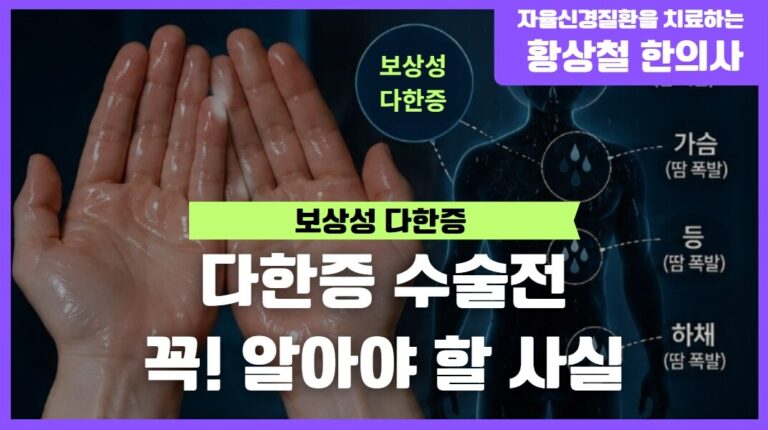
The key to treating hyperhidrosis is to prevent the side effect of “compensatory hyperhidrosis”—where sweat is secreted from other areas when sweat glands are forcibly blocked—and to correct the “see-saw balance” of the autonomic nervous system, which is the root cause of sweating. To this end, we offer a guide to key lifestyle habits that patients should practice in their daily lives outside the clinic.
- Ensuring Adequate Sleep Quantity and Quality: When you don’t get enough sleep, your brain perceives this as a state of chronic stress, which further stimulates the sympathetic nervous system during the day. Getting at least 7 hours of deep sleep at a set time every day is the foundation for regulating scalp sweating.
- Limiting caffeine and alcohol, which stimulate the sympathetic nervous system: Morning coffee and drinking after work directly disrupt the brain’s temperature regulation center and stimulate the sympathetic nervous system, making them major factors that worsen hyperhidrosis. We recommend temporarily limiting these during periods when symptoms are severe.
- Regular aerobic exercise to improve body temperature regulation: Rather than strenuous, high-intensity exercise, consistently doing aerobic exercise or stretching at least three times a week—enough to work up a light sweat—can improve blood circulation throughout the body and help alleviate the sensation of heat concentrated in a specific area (the head).
Only when your autonomic nervous system is in balance will you feel at ease.
Hyperhidrosis isn’t simply an embarrassing physical condition where you sweat a little more than others. It’s more like a physical signal indicating that the autonomic nervous system—which maintains the balance between tension and relaxation within the body—is currently overactive due to a specific cause. Therefore, rather than simply applying medication to the head or trying to stop sweating locally, it is most important to identify and correct the underlying internal causes—why my brain and body become so easily tense and release heat upward.
If you’ve been carrying a handkerchief around and resigning yourself to the idea that “this is just my constitution, so there’s nothing I can do,” or if the sudden increase in sweating on your head has recently made everyday activities—like meeting people or eating meals—feel like a burden, please don’t suffer in silence. By objectively assessing the state of your body’s autonomic nervous system and combining it with precise treatment and lifestyle management tailored to your needs, you can certainly raise your sweat threshold and return to a comfortable, confident daily life.