

Table of Contents

Is It Okay to Take a Sitz Bath for Cystitis Every Day? 3 Things to Watch Out for If You Have Recurrent Cystitis
If you suffer from recurring bladder infections, you’ll likely look for ways to manage them at home. One of the most common methods is a sitz bath, where you sit in warm water.
Sitz baths may help soothe the pelvic area, but they have not been proven to treat bacterial cystitis or prevent its recurrence. In particular, if the vulva is already sensitive, hot water or cleansing agents may make the discomfort worse.
Is it true that sitz baths are good for cystitis?
Soaking in warm water can temporarily relieve muscle tension and provide a sense of comfort. However, these effects are a separate issue from treating a bacterial infection in the bladder.
If you experience recurrent cystitis, you should first confirm whether you are actually experiencing recurrent bacterial urinary tract infections. Generally, if you have two or more urinary tract infections within a 6-month period or three or more within a year, this may meet the criteria for recurrent urinary tract infections.
At this point, it is important to consider not only the symptoms but also the results of urine tests, culture tests, and previous treatment records.
A Case in Which Cystitis Symptoms Worsened After a Sitz Bath
There was a patient who mentioned that, during treatment, the symptoms of recurrent cystitis had stabilized for a while, but then the pain during urination and frequent urination had become severe again.
While reviewing her lifestyle habits, I heard that she had recently taken a sitz bath and was concerned about the cleanliness of the water at the time.
Based on this case alone, it cannot be concluded that the sitz bath caused a bacterial infection. It is also possible that the cystitis recurred independently of the sitz bath, or that similar symptoms were caused by irritation of the vulva.
However, this case illustrates that individuals who suffer from recurrent cystitis should check the hygiene of their sitz baths and whether they cause skin irritation.
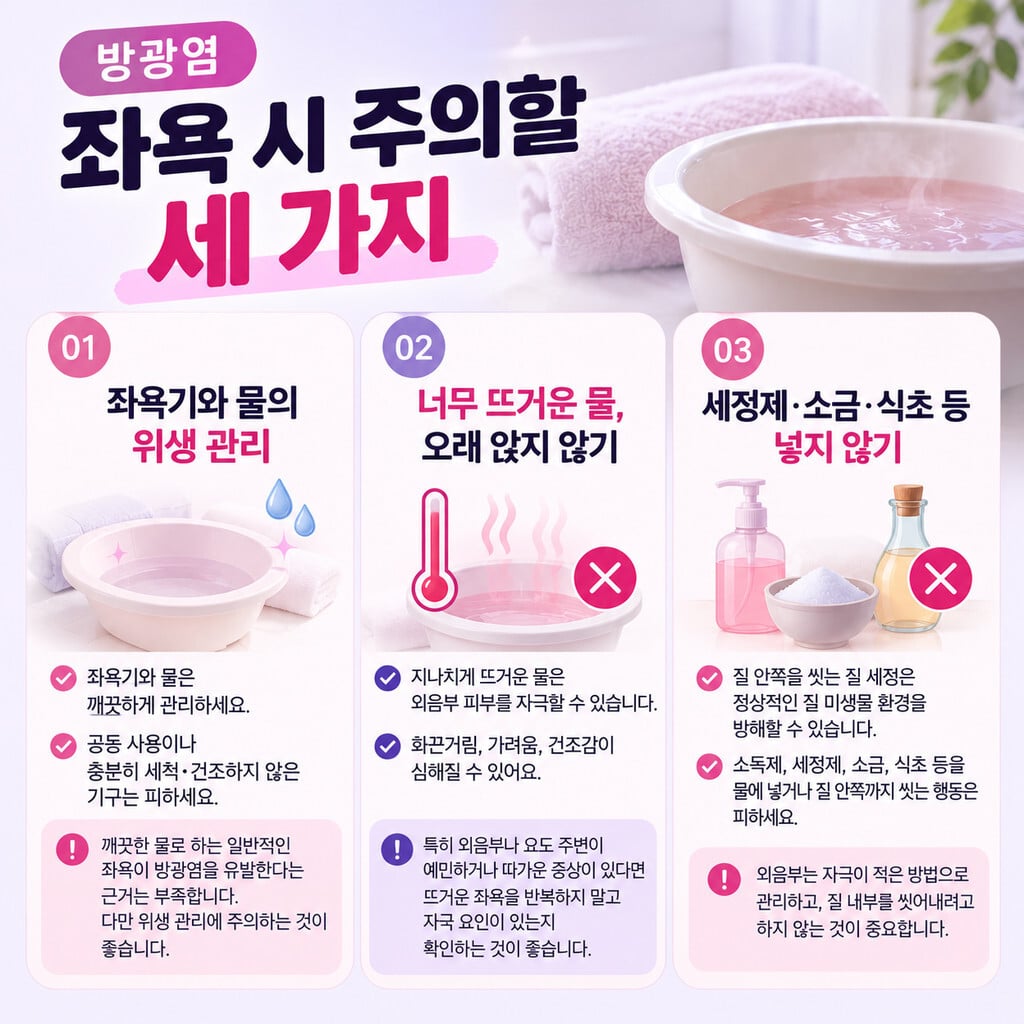
Three Things to Keep in Mind When Taking a Sitz Bath for Cystitis
1. Hygiene of the Sitz Bath and Water
The sitz bath and the water must be kept clean. It is best to avoid sharing the device or reusing it without thoroughly washing and drying it first.
However, there is insufficient evidence to suggest that regular sitz baths using clean water cause recurrent cystitis. It is important to distinguish between practicing good hygiene and jumping to conclusions about the risk of infection.
2. The habit of sitting in hot water for long periods of time
For people with sensitive vulvar skin, water that is too hot can cause a burning sensation, itching, and dryness.
If you are already experiencing a burning sensation in the vulva or around the urethra, you should avoid taking repeated hot sitz baths and check for any potential irritants.
3. Washing with feminine hygiene products, salt, vinegar, etc.
Vaginal douching, which involves washing the inside of the vagina, is not recommended because it can disrupt the normal vaginal microbial environment.
In particular, you should avoid adding antiseptics or cleansers to water or washing inside the vagina, especially if you have recurrent cystitis.
It is important to care for the vulva using gentle methods and to avoid trying to wash the inside of the vagina.
What is the best way to manage this instead of taking a sitz bath?
If you find sitz baths uncomfortable or if your vulva is sensitive, you can choose to wash only the outer part of your vulva briefly and gently with lukewarm running water.
Do not use strong water pressure or introduce water into the vagina; after washing, do not rub the area, but gently pat it dry.
This method is not a treatment for cystitis either. It is best to view it as part of your daily routine to maintain cleanliness and comfort.
If you have recurrent cystitis, what should you check for?
In cases of recurrent cystitis, it is more important to identify the patterns of recurrence and risk factors than to decide whether to take a sitz bath.
First, we perform a urine culture to determine whether recurrent bacterial infections are actually occurring. We also review the patient’s history of antibiotic use, sexual activity, contraceptive methods, menopausal status, and vaginal dryness.
After menopause, changes in the vaginal mucosa and microbial environment resulting from decreased estrogen levels may be associated with recurrent urinary tract infections. Appropriate candidates may consult with their healthcare provider about evidence-based preventive measures, such as vaginal estrogen therapy.
On the other hand, if frequent urination or bladder pain persists even though no bacteria are detected in a urine test, other causes—such as bladder pain syndrome or pelvic floor muscle dysfunction—should be considered.
In traditional Korean medicine, practitioners examine not only urinary symptoms but also sleep patterns, digestion, bowel movements, and tension in the pelvic area, and determine whether treatment is appropriate based on the individual’s condition. However, herbal medicine or acupuncture does not replace the antibiotic treatment required for bacterial urinary tract infections.
If you suspect you have recurrent cystitis, start by using this 1-minute self-checklist to keep track of your symptoms and the number of recurrences.
Go to the Recurrent Cystitis Self-Check CLICK >>
To reduce recurrent cystitis, identifying the cause is more important than taking a sitz bath.
While sitz baths may provide relief for some people, they are not a necessary treatment for all patients with cystitis.
Especially if you experience recurring symptoms of cystitis, it is important to determine whether you actually have an infection and identify your individual risk factors for recurrence, rather than simply dressing warmer or washing more frequently.
If you experience a fever, chills, or flank pain, you should seek medical attention promptly, as these symptoms may indicate a condition such as pyelonephritis.
If you are experiencing recurrent cystitis, it is best to accurately diagnose your current condition based on your previous test results and symptom history.
I will be there to support you throughout that process.