


Table of Contents
“They say there’s nothing wrong with my bladder, so why does it hurt so much?” I meet patients who say this in my office all the time. Their test results show no specific findings, yet they’re experiencing pain severe enough to make every day a struggle. Today, I’d like to discuss in a bit more depth a condition known as pudendal neuralgia—a symptom characterized by a sharp, stabbing pain or a dull, heavy ache along the line between the urethra and the anus, for no apparent reason.
Stories I Often Hear in the Exam Room
There are people who visit the hospital due to frequent urination or a sensation of incomplete emptying, only to be told every time that their test results are “normal.” Even after undergoing urine tests, ultrasounds, and even cystoscopies, no significant abnormalities are found. However, these individuals actually experience a stabbing pain, a sensation as if they’ve been cut with a knife, or a heavy, pressing pain along the line between the urethra, perineum, and anus. The pain tends to be particularly severe when sitting, though it may seem to improve slightly when they change positions.
When patients are repeatedly told that their test results show no problems, they gradually become exhausted. Many end up doubting themselves, wondering, “Am I just being overly sensitive?” or “Could this be psychosomatic?”—and I find that truly heartbreaking. The pain is clearly there; it’s just that the search for its cause has been focused solely on the bladder.
Case 1.A male patient who had been working in a seated position for long periods of time said that after the pain began, he assumed he had prostatitis and took antibiotics for a while. However, his symptoms did not improve; instead, he experienced a sensation of incomplete bladder emptying and other inflammatory symptoms, making his condition even more difficult to manage.
Case 2.Another female patient had a body type characterized by a particularly prominent tailbone; although her job did not require her to sit for long periods, her anatomy made her prone to structural pressure. Although she had been told by her urologist that her bladder was clear, she had long suffered from frequent urination, a sensation of incomplete emptying, and a stabbing pain between her vagina and pubic area.
Although the two patients’ stories are different, they share some commonalities. Both experience persistent pain despite the absence of obvious inflammation in the bladder or urinary tract, and their symptoms worsen when sitting for long periods, in certain positions, or due to specific physical factors. In such cases, it is important to consider pudendal neuralgia as a possible cause.
The Pudendal Nerve: Why Does It Cause Such a Wide Range of Symptoms?
The pudendal nerve originates from the sacrum, the bone that forms the posterior wall of the pelvis. If you examine the path this nerve takes as it passes through the pelvis and extends forward, you’ll understand why a single nerve can cause such a wide variety of symptoms. The pudendal nerve branches into three main divisions.
- Inferior rectal nerve — Responsible for sensation around the anus and control of the sphincter muscles.
- Pudendal nerve — It is involved in sensation in the perineum and around the urethra, as well as in the control of the urethral sphincter.
- Dorsal nerve of the penis (clitoris) — Transmits sensory information from the genital area.
If you trace the paths of these three branches, you’ll see that they cover the entire lower pelvic region—from the anus and perineum to the urethra and genitals. A key characteristic of this nerve is that it not only transmits sensory information but also serves as a motor nerve responsible for controlling the sphincter muscles of the urethra and anus. Therefore, if this nerve is compressed or blood flow is impaired, it can affect not only pain but also urinary and bowel habits. This is why you might experience a frequent urge to urinate, a feeling that your bladder isn’t completely empty after urinating, or discomfort during bowel movements. Because symptoms from these various systems are intertwined, it’s very easy to mistake this condition for other disorders such as bladder disorders, hemorrhoids, or prostate conditions.
In which groups of people is this more common?
In my practice, I often see patients who share certain common characteristics. These include office workers who spend most of their day sitting, as well as those who drive long distances or enjoy cycling—people whose pelvic floor is exposed to prolonged pressure—and those with a body type where the tailbone or ischial tuberosity protrudes significantly, making the act of sitting itself prone to causing nerve compression. Of course, even without these specific circumstances, various factors—such as tension in the pelvic floor muscles, postural habits, childbirth, or a history of pelvic surgery—can also contribute to the issue.
Why It Is Easily Confused with Interstitial Cystitis
In fact, the clinical literature has repeatedly reported that the symptoms of these two conditions overlap to a significant extent. According to data from the U.S. National Institutes of Health, interstitial cystitis (bladder pain syndrome) and pudendal neuralgia are considered representative conditions that share similar symptoms—such as pelvic pain, frequent urination, and dyspareunia—and are known to be difficult to distinguish diagnostically.
The main differences are that the pain associated with pudendal neuralgia is not significantly related to a full bladder, tends to be more pronounced when sitting or bending over, and is often described as a burning sensation or a sharp, electric-shock-like feeling. In contrast, with interstitial cystitis, the pain often worsens as the bladder fills and tends to subside somewhat after urination. Of course, it is possible for both conditions to coexist, so rather than jumping to a conclusion about which one it is, it is essential to comprehensively examine the nature and pattern of the pain.
That’s why, during consultations, I try not to focus solely on bladder symptoms, but also to carefully ask about the posture, time of day, nature, and location of the pain. Each question—such as “When does it hurt the most?” or “Is there a difference between when you’re sitting and when you’re standing?”—provides a clue for the diagnosis.
How can I go about getting a diagnosis?
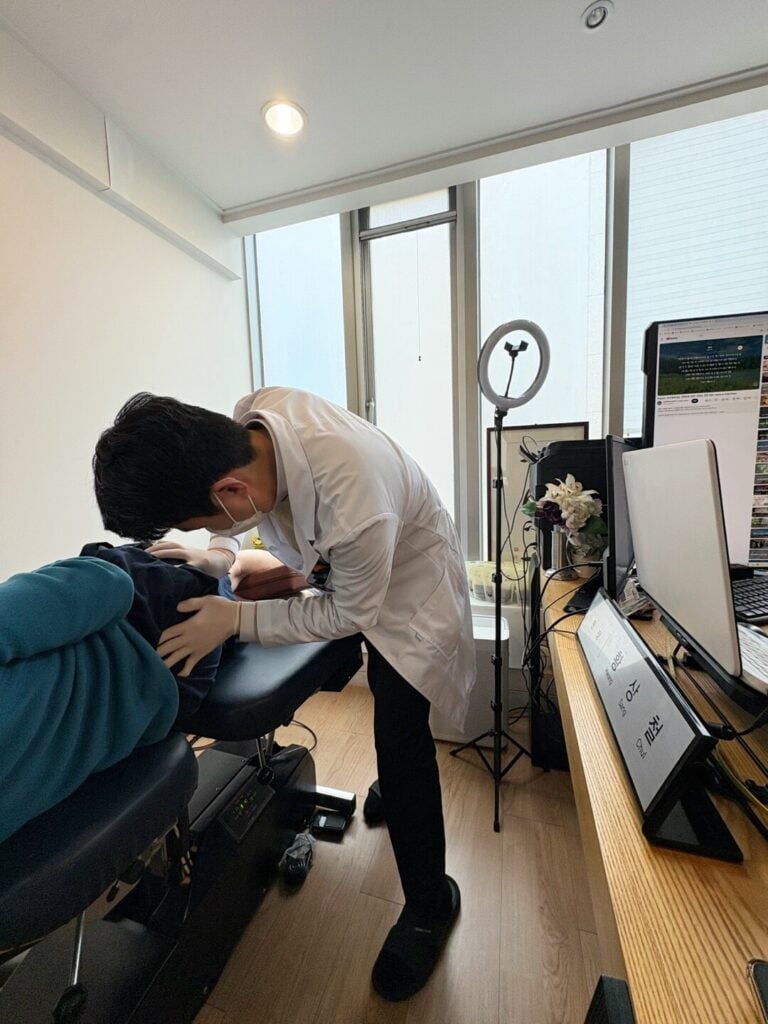
Since pudendal neuralgia cannot be definitively diagnosed through imaging tests, clinical judgment is particularly important. The diagnostic criteria proposed by a research team in Nantes, France, are widely referenced internationally. This approach involves a comprehensive assessment of factors such as whether pain is present along the nerve’s course, whether it worsens when sitting, whether the patient rarely wakes up at night due to pain, and whether there is no marked sensory loss.
This process must be accompanied by a thorough evaluation to rule out other causes, such as bladder or urinary tract infections, spinal problems, and anal disorders. I believe the first step toward an accurate diagnosis is to ask detailed questions about the location and nature of the pain, assess how it changes when sitting or standing, and, if necessary, evaluate the tension in the pelvic floor muscles.
So, if your symptoms haven’t improved much despite repeated urological treatments, I’d recommend having the pudendal nerve checked as well. Just identifying the exact cause can help alleviate some of the frustration you’ve been feeling.
Good Habits to Cultivate in Your Daily Life
In addition to medical treatment, adopting habits that reduce nerve compression in your daily life can help alleviate symptoms.
1. Break up your sitting time
If you spend long periods sitting while working or studying, we recommend setting an alarm every 30 minutes to an hour and getting up to walk around, even if just for a short while. It may feel like a hassle at first, but even this brief movement can be a practical way to reduce pressure on your nerves. On days when possible, gradually increasing the amount of time you spend working while standing can also be a good strategy.
2. Pay attention to your sitting posture and the cushion you use
Instead of sitting on a hard chair, using a donut-shaped seat cushion or regular cushion can help prevent direct pressure on the perineal area. Habits such as sitting with your legs crossed or leaning to one side can also affect pelvic balance, so try to maintain proper posture as much as possible.
3. Make it a habit to use warm heat therapy
The genital area, urethra, perineum, vagina, and anal region are areas where blood circulation can easily be impaired if pressure is sustained. Naturally, this inevitably affects the muscles and nerves that run through these areas. Try to make it a habit to gently relax these areas in warm water for 10 to 20 minutes—or about 30 minutes if you have the time—every day while showering or taking a half-body bath. While these two methods alone won’t completely resolve pudendal neuralgia, if you practice them consistently, you’ll likely notice that your symptoms become much more manageable.
Because pudendal neuralgia is difficult to diagnose, it is often mistaken for other conditions for a long time, leading to delays in treatment. If your pain persists even though bladder tests show no specific abnormalities, it may be necessary to take a broader approach to identifying the cause. I hope this article will be of some help in pinpointing the exact cause of the discomfort you are currently experiencing.