

───────────────────────────
What if your face is the only thing sweating in the middle of winter?
It may not be a gland issue, but a ‘muscle + autonomic’ issue
────────────────────────────
hello.
I’m Dr. Sangchul Hwang, an autonomic nervous system researcher and therapist.
“I’m naturally a sweaty person”,
“My face explodes with sweat when I’m nervous.”
or “My face explodes with sweat when I’m nervous.
However, in our practice
facial hyperhidrosis is much more than just a matter of “constitution”.
It’s called sympathetic overactivity,
and chronic tension in the specific musclesthat stimulate that sympathetic nerve
that stimulate the sympathetic nervous system.
Today, we ‘re goingto showyou the top 5 muscles that cause facial sweating,
and why these muscles cause an explosion of sweat production
and why they cause an explosion in sweat production.

5 Key Muscles That Create Facial Hyperhidrosis
────────────────────────────
1️⃣ quadriceps – a muscle that stimulates “breathing and sympathetic nerves” at the same time
The rectus abdominis is a very important muscle located deep in the front of the neck and directly connected to the diaphragm.
Sitting with your head forward, hunching over while looking down at your smartphone,
driving for long periods of time, etc. all contribute to stiffness in the squamus.
When the oblique muscles are tight, abdominal breathing is blocked and only shallow thoracic breathing is possible, causing the body to think it is in ‘tension mode’.
If this condition persists, the sympathetic nervous system is triggered and can lead to a feeling of heat, sweating, and palpitations in the face.
Frequent stiffness in the front of my neck
You have difficulty taking deep breaths
If this sounds like you, there’s a very good chance that you have a rectus abdominis problem.
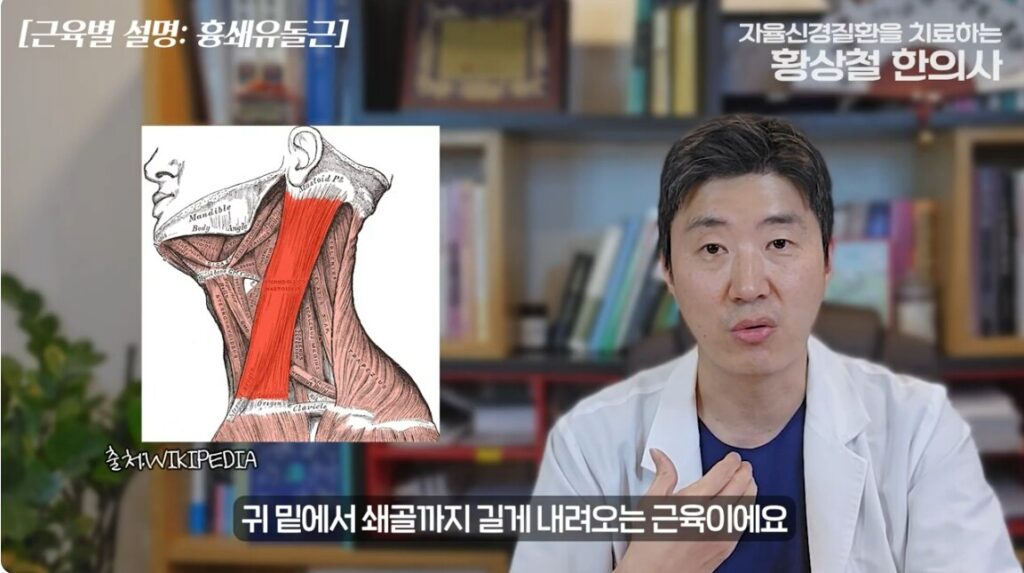
2️⃣ sternocleidomastoid – directly affects facial blood flow and nerves
This muscle, which runs from the base of your ear to your collarbone, is used a lot when you turn your head.
Sleeping on one side, looking down at your smartphone,
craning your neck forward can exacerbate sternocleidomastoid strain.
This muscle is connected to facial blood flow, facial nerves, and sympathetic nerve fibers.
Even a slight tightness can cause increased facial heat, sweating, scalp heat, and flushing.
One side pulls when you turn your head
One side of your neck is especially stiff
In this case, the sternocleidomastoid muscle must be checked.

3️⃣ biceps – muscles that compress the “vagus nerve” to stimulate the sympathetic nervous system.
The deltoid muscle is located under the chin and is easily stiffened by stress, grinding, or clenching your teeth.
The vagus nerve, the core of the parasympathetic nervoussystem, runs through this area.
Tight biceps inhibit vagal nerve function and overactivate sympathetic nerves, which can lead to
which can lead to facial hyperhidrosis – tension headaches – anxiety.
Jaw hurts in the morning
Your molars clench under stress
you are most likely experiencing a strain in your biceps.

4️⃣ Pectoralis minor – a muscle that causes the chest to rise and fall, resulting in shallow breathing.
When the pectoralis minor muscle tightens, it compresses the rib cage downward and makes deep breathing impossible.
When breathing becomes shallow, the sympathetic nerves are reactivated and facial hyperhidrosis becomes more severe.
Chest is tight
Your shoulders are rolled inward
You have rounded shoulders
then your pectoralis minor may be the culprit.
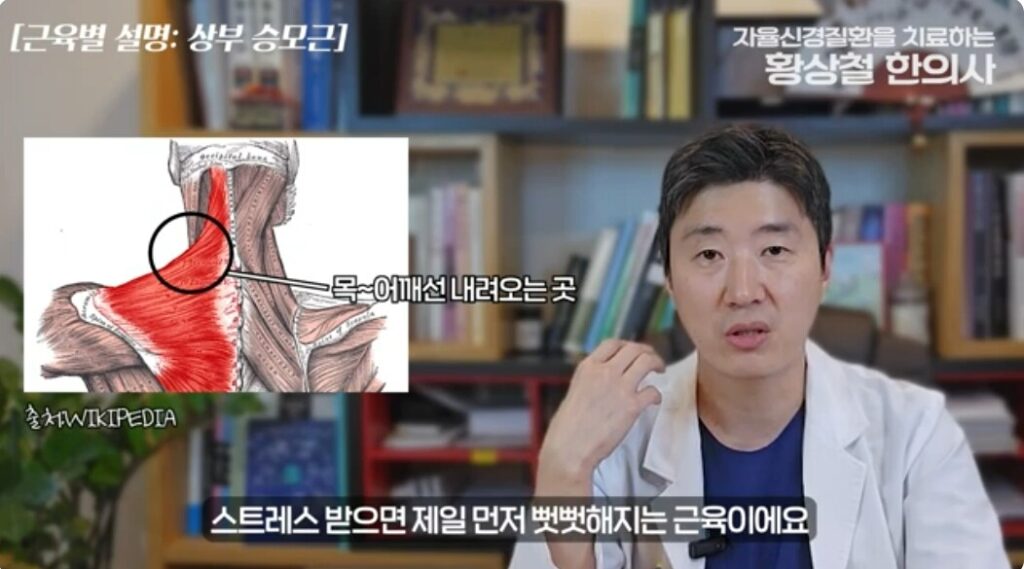
5️⃣ upper trapezius – the muscle where all stress gathers
The upper trapezius muscle is the muscle that stiffens the fastest under stress.
When this muscle becomes rigid, it compresses the cervical nerves and keeps the entire body in a state of tension.
The result can be an explosion of facial sweat.
Feeling heavy and tight in your shoulders all the time
Your shoulders strain just holding a posture
the trapezius muscle may be the culprit.
Facial Hyperhidrosis Isn’t Just a Problem with Sweat Glands
it is a ‘record of tension’
────────────────────────────
While many people think, “I’m just naturally sweaty,” the majority of people with facial hyperhidrosis actually start experiencing symptoms after puberty, in adulthood, or during times of stress.
This means that it’s most likely not a gland problem, but rather an autonomic nervous system problem caused by your body’s inability to get out of a tense state.
In other words, facial sweating is
Sympathetic overactivity
Chronic muscle tension
Shallow breathing
Poor posture
is the result of a combination of these.

Now we need to change the very structure of the body’s response
───────────────────────────
The rectus abdominis, sternocleidomastoid, biceps, pectoralis minor, and upper trapezius.
These five muscles are all key points of direct connection to the autonomic nerves.
Understanding and treating these structures
you can get a fundamental direction for recovery, not just an inhibitor.
Facial Hyperhidrosis Isn’t Just a Symptom
“how much tension my body has been under”
“how long my body has been under tension.
Sweat running down your face every day
because of the sweat that runs down my face every day…?
I’ve always had it since… Have you been putting up with the discomfort of…?
If you can start now to identify the exact cause
and take an approach that changes the flow of tension and nerves.
you can definitely get better
Your body starts to change the moment you understand the cause.
I hope this article is a small step in the right direction for anyone struggling with facial hyperhidrosis.