

Table of Contents
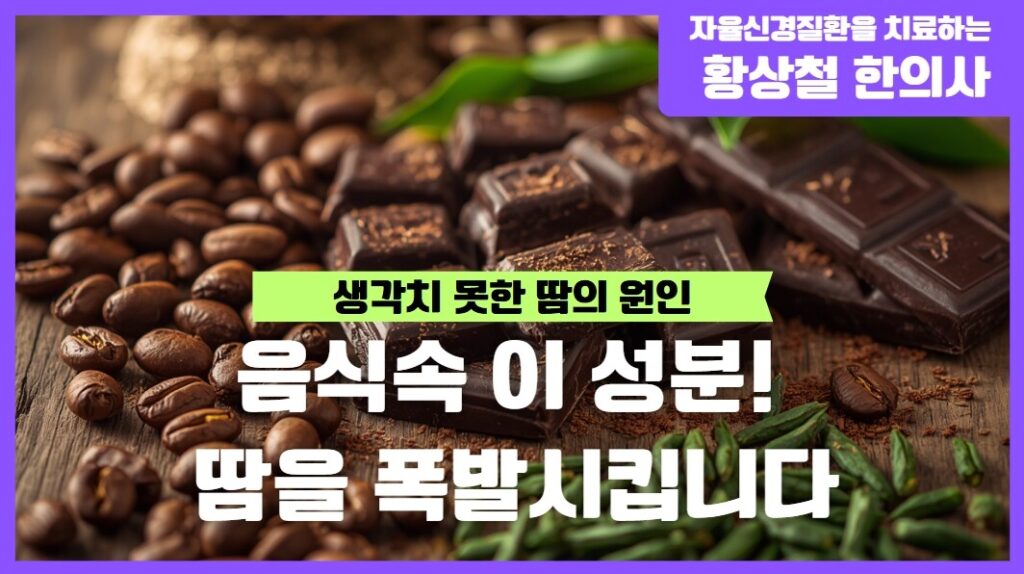
“This ingredient” in foods you wouldn’t expect
could be the cause of the sweating that plagues your daily life.
Did you know that “caffeine”—which many people consume simply to wake up or out of habit—can be a more potent stimulant than you might think for people with hyperhidrosis?
Hello. I am Dr. Hwang Sang-cheol, a specialist in the research and treatment of the autonomic nervous system.
Do you like coffee? I, too, usually start my day with a cup of coffee every morning. However, when I see patients who come to my clinic for hyperhidrosis, I often find that many of them are unaware that the caffeine in the coffee they drink every day is actually the main culprit behind their excessive sweating.
Today, I’ll explain in detail how caffeine stimulates our body’s autonomic nervous system and increases sweating.
1. The Scientific Reason Caffeine Increases Sweating
Caffeine is a well-known substance that stimulates the central nervous system. This is precisely why drinking coffee makes you feel alert and clear-headed. The problem is thatcaffeine doesn’t just stimulate the brain— it also strongly stimulates the body’s “sympathetic nervous system.”
When the sympathetic nervous system is activated, our bodies naturally undergo the following physical changes.
- The heart beats faster and blood pressure rises
- Metabolism speeds up and body temperature rises
- Sweat production increases rapidly to regulate body temperature
For people whose autonomic nervous system is naturally sensitive—meaning their sympathetic nervous system is easily stimulated—even a single cup of caffeine can immediately trigger a “state of tension” in their bodies, similar to a crisis situation. As a result, they experience a sudden surge of sweating in their hands, feet, armpits, and face.
2. “After drinking coffee, I started sweating profusely on my face and head.”
It is not uncommon for patients to report these symptoms in my practice. In particular, the symptoms tend to be more severe in people who have the habits listed below.
- The habit of drinking strong coffee on an empty stomach in the morning
- If you frequently drink high-caffeine energy drinks to combat fatigue
- If you drink several cups of caffeinated beverages a day
If you’ve ever experienced a flushed face, beads of sweat running down your forehead, a racing heart, and clammy palms after drinking coffee, that’s a clear sign that your body is reacting excessively to caffeine.
3. “I don’t drink coffee, though?” Hidden sources of caffeine everywhere
During consultations, when I tell patients they need to cut back on caffeine, some of them respond indignantly, “Doctor, I don’t drink coffee at all.” However, caffeine is often hidden in unexpected food groups that we may not realize.
💡 Foods containing caffeine hidden in everyday life: green tea, black tea, matcha, etc. / energy drinks / chocolate and chocolate snacks / some diet supplements / commercially available fatigue-relief drinks, etc.
In particular, some diet supplements and energy drinksoften contain much higher levels of caffeine than regular coffee, so people with hyperhidrosis should be sure to check the ingredient labels carefully.
4. Signs of Caffeine Side Effects That People with Hyperhidrosis Should Definitely Watch For
If you experience the following symptoms after consuming caffeine, it means your autonomic nervous system is overstimulated and crying out for help.
- My face suddenly turns red or feels hot.
- My heart is racing, and I’m feeling increasingly anxious for no apparent reason.
- My hands, feet, and armpits get damp very quickly.
- Sweat streams down my face and head (scalp) like tears.
- My mouth often feels dry, and I have trouble falling asleep at night.
5. Ultimately, the key to treating hyperhidrosis lies in the “autonomic nervous system.”
Many people view sweating as simply a problem with the skin or the sweat glands themselves, and therefore focus only on treatments designed to stop it. However, as you’ve seen, sweating is closely related to the regulatory functions of the autonomic nervous system.
When the sympathetic nervous system becomes overly stimulated, the sweat glands simply respond to that signal. Therefore, the fundamental treatment for hyperhidrosis goes beyond simply suppressing visible sweating; it involves identifying the root causes — such as “why my body’s sympathetic nervous system is so overly stimulated” and “why I become easily anxious and experience a rush of heat to my head even from minor stimuli”— and restoring balance to the autonomic nervous system.
In Conclusion
Of course, not all cases of excessive sweating are caused solely by caffeine. However, if you tend to sweat more than others, enjoy drinking coffee, and experience both facial flushing and heart palpitations at the same time, I recommend that you try drastically reducing your caffeine intake—or even cutting it out entirely—starting today.
You might be surprised to learn that the single cup of coffee you drank without a second thought may have been constantly disrupting your autonomic nervous system day and night.
If you’re struggling with hyperhidrosis or excessive sweating in your daily life, please feel free to leave a comment below describing your symptoms or asking any questions you may have. I’ll review your comment personally and respond thoughtfully. If you have family members or friends who are struggling with sweating, please feel free to share this post with them . Thank you.