


Table of Contents

hello.
I’m Dr. Sangchul Hwang, an autonomic nervous system researcher and therapist.
Parents who come to the doctor’s office with their child’s frequent wetting of the bed or pediatric bedwetting often say something similar.
“I know I shouldn’t scold him, but I keep getting impatient.”
As a parent, we understand your frustration.
However, your child’s urination problems are never a matter of discipline or willpower.
Most of the time, it’s a sign that your child’s body and nerves are still learning to control urination.
One of the most embarrassing and difficult symptoms for a child to deal with is wetting the bed.
How you view and approach this problem can make a big difference in how quickly your child recovers.
What causes urination problems in children?
Your child’s urination is not just a function of the bladder alone.
It requires the brain, autonomic nerves, pelvic floor muscles, and psychological state to work together to keep it under control.
Children who have not yet fully matured this system
Even if they feel the cues that they need to pee
they may leak urine before their brain can adjust to say, “You can hold it now.”
This is not an intentional behavior
your body is still learning to control urination.
This is very common, especially in children around the age of 5,
not all children grow at the same rate.

What parents miss most, your child’s body shape and posture
If you look closely at children in the clinic
More often than you might think, they have a hunched back or forward pelvis.
This body type puts constant tension on the pelvic floor and lower abdominal muscles,
and the bladder that sits inside of them.
As a result, bladder nerves become sensitive
and the urge to urinate may be signaled more often and more urgently than it actually is.
For these children
Posture correction and body shape management are often the first steps in treatment before medication.
How do we approach interdisciplinary care?
Both sides usually use a combination of medication and behavioral therapy.
Antidiuretic hormone medications or bladder control medications
can help relieve symptoms quickly.
But medications don’t address the root cause of bladder sensitivity,
such as nervous tension or body shape issues.
This can lead to longer treatment periods or
or stopping the medication, it’s not uncommon for symptoms to return.
Alarm behavior therapy is a low-side effect method, but
but can be difficult to apply if your child’s nervousness is high.
This is how Chinese medicine views urination problems in children
In Chinese medicine, the first step is to determine if there is a neurological abnormality.
If it’s the spinal cord or central nervous system, the treatment will be completely different.
However, most children have functional problems,
in which case a Chinese medicine approach is likely to be sufficient.
Clinically, we divide a child’s condition into two main types.
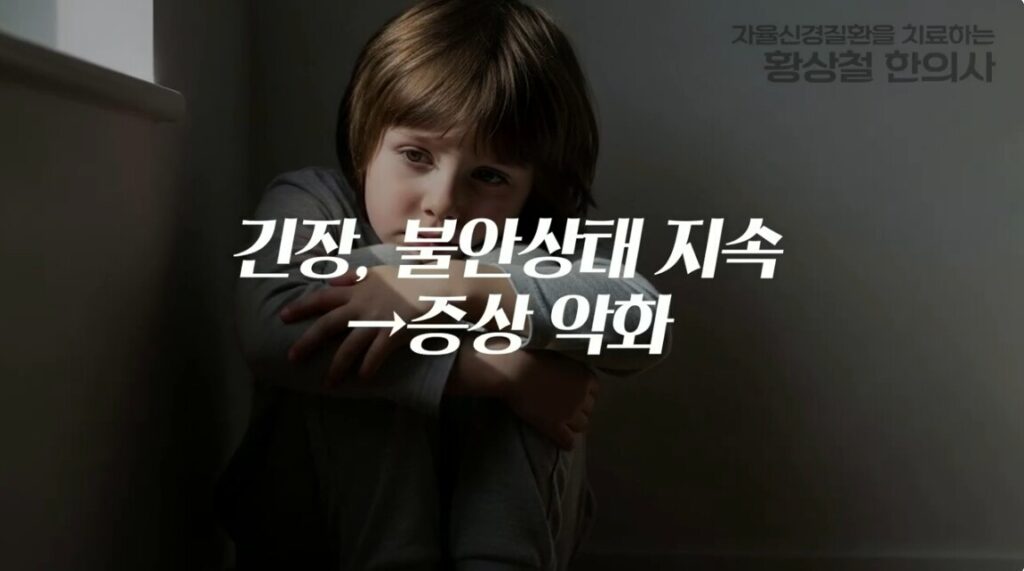
Children with overactive sympathetic nerves
This type of child has a quick tense response to small stimuli.
The slightest scolding makes me want to pee.
symptoms tend to be worse when you’re stressed.
In this case, the key is to relax the
nervous system before the bladder itself.
Relieve tension in the lower abdomen, hips, and sacral region, and
and stabilize the autonomic nervous system.
Children lacking stamina and energy to grow
These children are generally less fit and
and often have slow growth rates.
Your bladder hasn’t developed enough storage capacity
You need to go to the bathroom often, even when you drink little water
repeated urinary mistakes during the night.
In this case, it’s not just bladder function
but also the child’s growth energy and immunity.
Parental Attitude is Half the Cure
The most important factor in pediatric urination problems is
the child’s psychological state.
When a child is scolded or embarrassed
the child’s autonomic nervous system becomes more tense
and symptoms are likely to get worse.
“It’s okay, your body is learning.”
This is the fastest way to calm a child’s nervous system.
Your child’s urination problems are
Your child’s problem is his own worst enemy.
The moment they feel understood and protected
your child’s body will start moving towards recovery much faster.
Wrapping up
A child’s urine mistake is
is not a failure of discipline, it’s a part of growing up.
Instead of scolding
look at the cause, understand the body’s cues, and work at your child’s pace,
and work at the child’s pace.
recovery is definitely possible.
If you’re struggling with your child’s bedwetting, here’s what you need to know
don’t feel like you have to go it alone
and feel comfortable getting help.
Feel free to leave a comment if you have any questions.
We’re here to help you and your child
a little more comfortable.